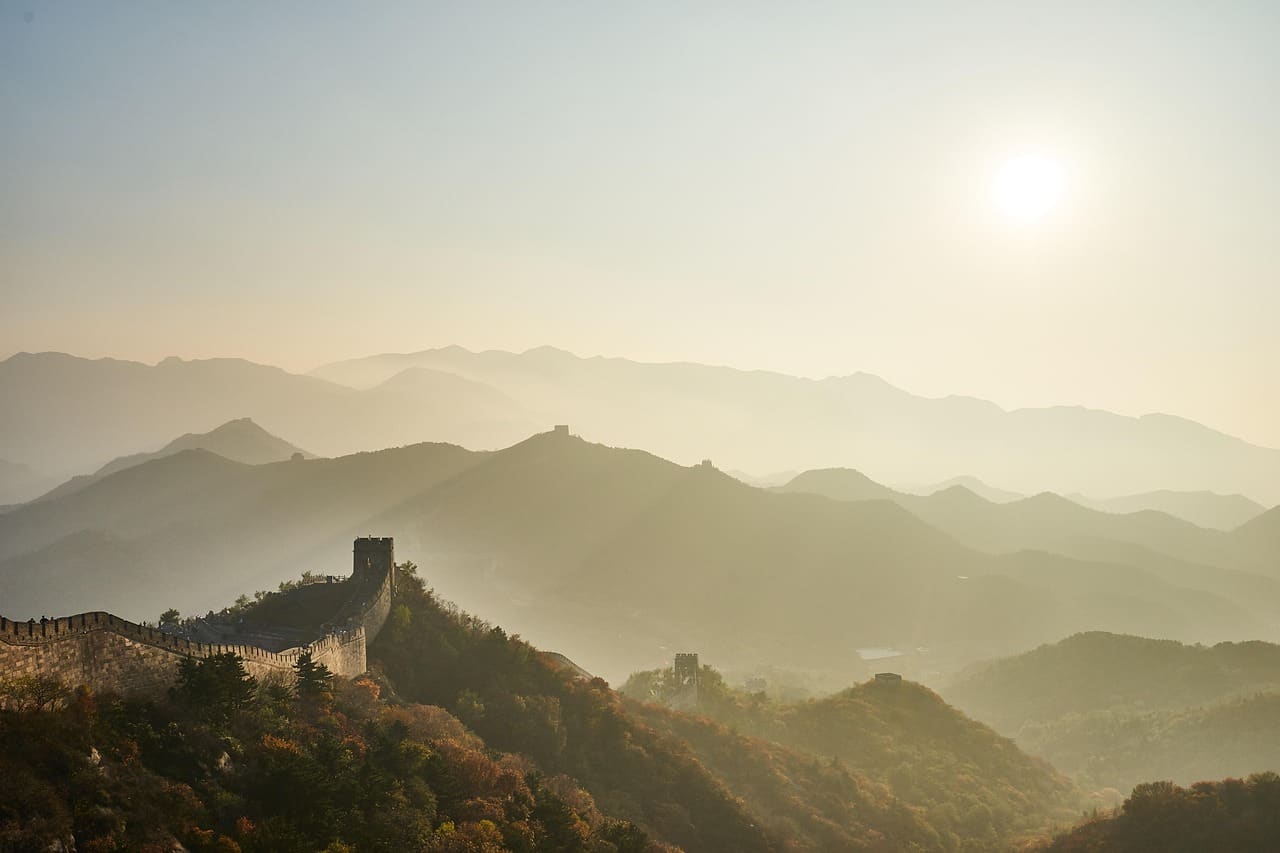
When I came to Beijing for the first time, the Great Wall was almost an essential stop. But there is more than just one section of the Great Wall around Beijing: Badaling is famous for its popularity and convenient transportation, Mutianyu combines mountain scenery and sightseeing experience, Jinshanling is more suitable for photography and hiking, and Simatai can be combined with Gubei Water Town to experience night tours.
They are all important parts of the Great Wall of the Ming Dynasty, but have different geographical locations, architectural styles, open ranges, difficulty of tours and traffic conditions.
If you only have one day, where should you go? Which one is more suitable for taking care of the elderly and children? If you want to avoid large tour groups, which section should you choose? If you want to take photos of sunrise, sunset or night views of the Great Wall, how should you arrange it?
This guide sorts out the four most worth comparing sections of the Great Wall around Beijing from six aspects: landscape features, transportation methods, open areas, cable car facilities, difficulty of tour, and suitable groups, to help you make a choice based on your actual travel needs.
01|First of all, let me give a conclusion: What kind of tourists are suitable for each of the four sections of the Great Wall?
Badaling Great Wall: Suitable for tourists who are coming to Beijing for the first time, have limited time, and want convenient transportation.
- The Great Wall is well-known, has a grand scale of construction, and its city walls and watchtowers have distinctive classic Ming Great Wall characteristics.
- There are transportation options such as Beijing-Zhangjiakou high-speed railway, suburban railway and tourist buses.
- The scenic spot has mature facilities and is suitable for families and international tourists visiting Beijing for the first time.
- There are many tourists during holidays and popular periods, so reservations and travel times need to be arranged in advance.
Mutianyu Great Wall: Suitable for tourists who value natural scenery and want to combine comfort with Great Wall experience.
- The mountain is rich in vegetation and is especially suitable for viewing in spring and autumn.
- The matinee is open to watchtowers 1 to 20, and the tour range is relatively complete.
- There are different ways to visit such as cable cars, ropeways, and slides.
- Compared to Badaling, it is usually easier to arrange a relatively comfortable tour pace, but queues may also occur during popular times.
Jinshanling Great Wall: Suitable for photography enthusiasts, hikers and tourists who want to experience the history of the Great Wall in depth.
- Located in Luanping County, Chengde City, Hebei Province, it is not within the administrative area of Beijing.
- The city wall extends along the ridge, and the watchtowers, crenellations and barrier walls are relatively well preserved.
- The landscape has outstanding layers and is suitable for shooting the continuous undulating ridges of the Great Wall.
- It is far away from downtown Beijing, so transportation and hiking arrangements require more preparation.
Simatai Great Wall: Suitable for tourists who want to experience the steep Great Wall, unique single-sided wall landscape, night view and Gubei Water Town.
- It is famous for its steep mountains, dense watchtowers and unique architectural structures.
- It is adjacent to Gubei Water Town and is suitable for arranging a combined trip to the Great Wall and the ancient town.
- Watchtowers No. 10-12 in the eastern section have been reopened in 2026, increasing the scope of daytime tours and viewing.
- The opening range for night tours is part of the section from East 5th to East 6th Watchtower.
- The unopened original Great Wall area cannot be used as a hiking route for ordinary tourists.
Simply put:
- I just want to choose the most classic and most convenient one: Badaling.
- Want to combine scenery, a cable car and a day trip experience: Mutianyu.
- I want to shoot a more layered scenery of the Great Wall: Jinshanling.
- Want to combine the Great Wall, night view, ancient town and accommodation: Simatai.
There are no absolute advantages or disadvantages among these four sections of the Great Wall. They address different travel needs, and it is not recommended to simply base your decision on the traffic rankings on the Internet or the so-called best Great Wall rankings.
02|Badaling Great Wall: First time in Beijing, the most classic choice
Badaling Great Wall is located in Yanqing District, Beijing. It is the most representative Great Wall scenic spot in Beijing and one of the most famous Great Wall tourist destinations in China.
The Great Wall here is undulating along the mountains, with wide walls and densely distributed watchtowers. The repaired and open tourist area has relatively mature walking conditions.
For international tourists who come to China for the first time and want to experience the majestic scale of the Great Wall with their own eyes, Badaling is a safer choice.
What are the characteristics of Badaling?
The most outstanding feature of Badaling is its sense of scale and overall ornamental quality.
After climbing the city wall, you can see the Great Wall extending continuously along the Yanshan Mountains. The city walls, watchtowers and ridges form a representative landscape of the Great Wall of China.
Compared with some sections of the Great Wall that retain more of their original state, the tourist facilities in the Badaling Open Area are more complete and are suitable for tourists who do not want to spend a lot of energy on transportation and route planning.
How to get to Badaling?
One of the biggest advantages of Badaling is the many transportation options.
1. Beijing-Zhangjiakou High-speed Railway
The Beijing-Zhangjiakou High-speed Railway has Badaling Great Wall Station. Visitors can buy tickets to Badaling Great Wall Station from stations such as Beijing North Railway Station or Qinghe Station according to the train time of the day.
After arriving, follow the on-site instructions to the entrance of the scenic spot or the corresponding climbing area.
It should be noted that the Badaling Great Wall Station is not at the same location as the entrance to the scenic spot. After leaving the station, you still need to walk or follow the on-site instructions to complete the connection.
2. Suburban Railway Line S2
Line S2 also has Badaling Station, which is another way to get to Badaling.
Special attention needs to be paid to the line adjustment: starting from October 25, 2025, Huangtudian Station will cease operations, and the S2 line operating section will be adjusted from Nankou Station to Yanqing Station (Shacheng), while Badaling Station will still be in the operating section.
As of November 2026, the Beijing Municipal Transportation Commission announced the following:
- Tuesday to Thursday: 2 pairs of trains per day.
- Friday to Monday and short holidays: 3 pairs of trains per day.
This means that Line S2 is not a high-frequency urban subway. You must check the day's timetable in advance and arrange your outbound and return journeys reasonably.
3. Tour bus or chartered car
For international tourists who are not familiar with China's public transportation system, they can consider tourist express trains, one-day tours with travel agencies, or chartered cars.
When choosing, you need to confirm the specific pick-up location, departure time, return arrangements, and whether tickets are included.
Do I need to take the cable car in Badaling?
There are different ways to climb the city in Badaling, including the northern cableway, the southern cable car, and pulley facilities in some areas.
Need to distinguish:
- The cableway and the ground cable car are different transportation facilities and correspond to different climbing areas.
- The slide is an independent tour project and is not equivalent to the cable car.
- Ticketing, operating hours and ride locations are not universal across facilities.
If there are elderly people or children traveling with you, you can give priority to using cableways or ground cable cars to reduce the physical exertion of climbing, but you still need to walk on the Great Wall after taking the equipment.
What kind of tourists is Badaling suitable for?
- It’s my first time traveling to China and I hope to experience the most iconic Great Wall.
- There is only one day in Beijing trip, so I hope the transportation arrangements will be simple.
- Families with children or those wishing to use more mature scenic area facilities.
- Tourists who want to combine the Great Wall Museum, Zhan Tianyou Memorial Hall and other surrounding cultural facilities.
Practical reminder: Badaling is prone to concentrated passenger flow on weekends, public holidays and peak tourist seasons. It is recommended to make a reservation in advance and try to enter the scenic spot as early as possible in the morning.
03|Mutianyu Great Wall: Walking from Watchtower No. 1 to Watchtower No. 20, experience the Great Wall in the mountains and forests
Mutianyu Great Wall is located in Huairou District, Beijing. It is one of the very popular Great Wall scenic spots around Beijing.
Compared with Badaling, Mutianyu's natural vegetation landscape is more prominent. The Great Wall winds along the ridge, and the two sides are covered with mountains and forests. In spring, there are mountain flowers, and in autumn, you can see different layers of colorful leaves.
If you want to enjoy the natural scenery of the mountainous area in northern Beijing in addition to the historical scenery of the Great Wall, Mutianyu deserves your priority.
Where is Mutianyu open to?
This is information you need to pay special attention to when planning your trip to Mutianyu.
According to the tourist information currently published on the official website of the Mutianyu Great Wall, the open tour range for the matinee tour is from Watchtower No. 1 to Watchtower No. 20**.
in:
- Watchtower No. 1, the Big Corner Tower, is a representative building at the east end of the Mutianyu Great Wall.
- Watchtower No. 20 is located at the west end of the open tourist area. It is often called the check-in location of Haohan Slope by tourists, and it is also a representative viewing spot.
From Watchtower No. 1 to Watchtower No. 20, you can see the continuous landscape of the Great Wall extending along the ridge. The slope, steps and walking difficulty vary in different areas, and it is not a gentle trail throughout.
For ordinary tourists, there is no need to complete the tour from beginning to end. You can choose an appropriate tour distance based on your physical strength, cable car location and actual opening conditions.
What are the ways to visit Mutianyu?
Mutianyu offers a variety of ways to climb up and down the mountain.
- Cable Car: Suitable for tourists who want to reduce climbing and save energy.
- Ropeway: It belongs to a different operating system from the cable car, with different climbing locations and routes.
- Slide: It is a unique downhill experience and is suitable for tourists who meet the safety requirements of the scenic spot.
- Walking: Suitable for tourists with good physical strength who want to fully experience the mountainous Great Wall.
It should be noted that cable cars, ropeways and slides are not the same set of facilities, and tickets cannot be simply interchanged. When choosing a tour route, you should first determine where you want to climb the city, which watchtowers you want to visit, and where you want to finally descend.
In addition, the opening ranges of Mutianyu matinee and night clubs are different:
- Matinee: Watchtower No. 1-20.
- Night show: Watchtower No. 10-15.
If you plan to tour at night, you should purchase the corresponding night tour products, and do not understand the night tour route based on the opening range of the matinee tour.
How to get to Mutianyu?
There is no subway or high-speed rail station in Mutianyu directly leading to the entrance of the scenic spot.
Main modes of transportation include:
1. Tourist Express
Suitable for international tourists who are not familiar with Beijing's public transportation. Some travel products provide round-trip transfers in Beijing, but you need to confirm the pick-up location, departure time, whether tickets are included, and whether there are other stopping points.
2. Chartered car or private transfer
Suitable for families, groups of people or travelers who want to be flexible with their schedule.
Starting from downtown Beijing, the actual journey will be affected by the departure location, road traffic and weather, so it is recommended to allow sufficient time.
3. Public transportation
You can also use Beijing public transportation to go to Huairou, and then transfer to the bus or other connecting transportation to the scenic spot.
But for foreign tourists who come to Beijing for the first time, carry luggage or bring children, this method requires more transfers and route confirmations.
What kind of tourists is Mutianyu suitable for?
- I hope to enjoy the natural scenery combining mountains, forests and the Great Wall.
- When traveling with children, I hope to add some fun.
- I hope to use the cable car to reduce the physical exertion of mountaineering.
- Love photography, but don't necessarily want to go on long hikes.
- I have already been to Badaling and hope to experience a different style of the Great Wall.
Actual reminder: Mutianyu is not a completely flat scenic spot. Even if you take the cable car to the city, you still need to pass steps and ramps of different heights. When traveling with the elderly, the distance to be traveled should be determined based on physical conditions.
When is the best time to go to Mutianyu?
Mutianyu’s officially announced seasons are divided into:
- Peak season: March 16th to November 15th.
- Low season: November 16th to March 15th of the following year.
During peak season:
- Monday to Friday: The scenic area is open from 7:30 to 18:00.
- Saturday and Sunday: The scenic area is open from 7:30 to 18:30.
During low season:
- The opening hours of the scenic spot are 8:00-17:30.
The cable car operation hours are also subject to seasonal adjustments, and the details are subject to the announcement of the scenic spot on the day.
It should be noted that the above are the regular operating arrangements announced by the scenic spot. They may be temporarily adjusted when encountering severe weather, equipment maintenance or special management requirements.
04|Jinshanling Great Wall: more suitable for photography and in-depth hiking
Jinshanling Great Wall is located in Luanping County, Chengde City, Hebei Province, adjacent to the Miyun area of Beijing.
Strictly speaking, Jinshanling does not belong to the administrative region of Beijing, but is a very important stop on the Great Wall travel route around Beijing.
If Badaling represents the classic Great Wall landscape that has been fully developed for tourism, then the more prominent features of Jinshanling are the continuous ridge lines, rich watchtower structures, and relatively broad views.
Why do photographers like Jinshanling?
The Jinshanling Great Wall stretches along the Yanshan Mountains, with dense watchtowers and rich terrain changes.
Here you can see different forms of Great Wall buildings, including:
- Watchtower: A building responsible for observation, defense and garrison functions.
- Crenelations: The defensive structures at the top of a city wall.
- Barrier wall: A wall structure used to increase the level of defense.
- Ridge Wall: Continuously undulating along the mountains, forming a layered outline of the Great Wall.
Compared with the more complete and regular open tourist area in Badaling, Jinshanling is more suitable for observing the relationship between the Great Wall and the mountain terrain.
The oblique light in the early morning and evening is conducive to expressing the undulations of the city wall, the outline of the watchtowers and the levels of the ridges. Therefore, this is also a frequently chosen destination for Great Wall photography and hiking enthusiasts.
However, it should be noted that sunrise and sunset photography does not mean that the scenic spot is allowed to enter at any time throughout the year. Actual opening hours, entrance management and weather restrictions must be subject to the announcement on the day.
What kind of hiking is suitable for Jinshanling?
The tour experience of Jinshanling should not be simply understood as a fixed 10-kilometer hiking route.
The total length of the scenic spot, the open tourist range and the actual hiking distance that ordinary tourists can complete are three different concepts.
Actual tour time depends on:
- Enter through the main entrance or the east entrance.
- The watchtower and city wall areas opened on that day.
- Whether to use ropeways.
- Whether you plan to return to the original entrance.
- Personal physical strength and shooting dwell time.
For ordinary tourists, it is recommended to give priority to the tourist routes that are officially open to the scenic area, and not to enter unopened areas in order to complete the so-called full journey.
How to get to Jinshanling?
Jinshanling is far away from the center of Beijing and is located in Luanping County, Hebei Province. It is more suitable for chartering a car, self-driving or arranging travel transfers in advance.
Starting from downtown Beijing, the actual journey will be affected by the starting location and road conditions, so sufficient travel time should be reserved.
If you wish to use public transportation, you need to check in advance whether there are special travel lines, shuttle buses and return arrangements applicable to the travel date. It cannot be directly assumed that taxis or online ride-hailing services are available around the scenic area at any time.
Jinshanling in particular requires planning your return trip in advance. If you use a chartered car, it is recommended to confirm the specific scenic spot entrance and pick-up location with the driver to avoid the problem of inconsistent pick-up locations between the main entrance and the east gate.
What kind of tourists is Jinshanling suitable for?
- Great Wall photography enthusiast.
- Tourists with some mountain hiking experience.
- People who have already visited Badaling or Mutianyu and want to know more about the architectural features of the Great Wall.
- People who want to experience the relatively open and continuous mountainous Great Wall landscape.
Actual reminder: Although Jinshanling is more suitable for scenic hiking than parts of the original Great Wall, it is still a mountainous environment. Some steps, ramps and walls are uneven and not suitable for people with mobility impairments. Special attention should also be paid to ice, snow and high winds in winter.
05|Simatai Great Wall: Single-sided wall landscape, steep mountains and night tour of Gubei Water Town
Simatai Great Wall is located in Gubeikou Town, Miyun District, Beijing, close to Gubei Water Town.
The biggest difference between it and Badaling and Mutianyu lies in the steep mountainous terrain, unique architectural forms, and the combined experience of the nighttime landscape of the Great Wall and the ancient town.
Simatai Great Wall is one of the representative historical relics of the Great Wall of China. The entire section of the Great Wall is about 5.4-5.7 kilometers long. Different official data have slightly different statistics on the length. There are a total of 35 watchtowers along the line.
What areas are currently open in Simatai?
This is especially important.
Simatai Great Wall is not a fully open tourist attraction. The areas that tourists can enter must be subject to the current opening announcement of the scenic spot.
According to the latest operational information released on the official website of Gubei Water Town on October 4, 2026, watchtowers 10-12 in the eastern section of Simatai Great Wall have been fully reopened. Watchtowers 11-12 are important viewing areas, where you can enjoy the iconic single-sided wall landscape up close.
The current daytime itinerary should be based on the officially opened eastern section of the scenic spot. All 35 watchtowers cannot be understood as areas that tourists can freely access.
In particular, the following locations need to be distinguished:
- Watch Towers 1-12 in the East Section: Daytime tours should be based on the opening routes announced by the scenic spot at that time. Watch towers No. 10-12 have been reopened in 2026.
- The steep area near No. 13-16 in the eastern section: It should not be recommended as a regular climbing route for ordinary tourists.
- Ladder to Heaven, Fairy Tower, Wangjing Tower: This is an introduction to the representative landscapes of the historical buildings and steep mountains of the Simatai Great Wall, and should not be understood as open attractions that ordinary tourists can visit.
These unopened areas involve cultural relic protection and safety management. Do not cross, climb or deviate from the scenic area's permitted routes on your own.
What is the most worth seeing in Simatai?
For day visitors who can currently arrange normally, it is recommended to focus on the open area in the eastern section and its single-sided wall landscape.
The single-sided wall is one of the representative architectural forms of the Simatai Great Wall. The Great Wall stretches along precipitous mountain ridges, presenting a unique wall structure in steep areas.
Especially after the reopening of Watch Towers 10-12, visitors will have the opportunity to appreciate the relationship between the Great Wall and the mountain in a more complete viewing area in the eastern section.
Rather than simply pursuing the highest point, understanding the Great Wall's defensive structure, wall changes, and mountain terrain will make this trip more valuable.
Is Simatai Night Tour worth it?
The combination of Simatai and Gubei Water Town is a unique night travel experience around Beijing.
However, night tours have an independent opening range and cannot be confused with day tours.
According to Gubei Water Town’s official night tour ticket instructions:
- Open area for night tours: part of the road from East No. 5 Watchtower to No. 6 East Watchtower.
- Night tours usually combine a cable car ride up the mountain with a scenic walk.
- Night tours require the purchase of corresponding night tour tickets or combination tickets.
- Night tour opening hours are adjusted according to season and date.
In other words, the night tour does not open all the watchtowers 1 to 12 that are open during the day until night, but is limited to parts of the east 5th to 6th watchtowers.
The main value of the night tour is to enjoy the light views of the valley and Gubei Water Town from high on the Great Wall, rather than doing a long hike.
How to get to Simatai?
1. Gubei Water Town Tourist Express
Some tourist routes go from downtown Beijing to Gubei Water Town, which is suitable for tourists who want to arrange the Great Wall and the ancient town in one trip.
It is necessary to confirm the flight schedule, return time and whether an appointment is required in advance.
2. Huaimi Line Suburban Railway
You can consider taking the Huaimi Line to Gubeikou Station, and then go to Gubei Water Town according to the actual bus connection arrangement.
However, there is still a distance between the train station and the scenic spot, and the connecting transportation must be confirmed in advance. Arrival at Gubeikou Station cannot be equated with arriving at the scenic spot.
3. Chartered car or self-driving
Suitable for families, groups of people, and tourists who plan to stay in Gubei Water Town for one night.
If you choose to travel at night, it is recommended to prioritize accommodation in Gubei Water Town to avoid the long journey back to Beijing at night.
What kind of tourists is Simatai suitable for?
- Visitors interested in the history and architectural structure of the Great Wall.
- Love rugged mountain landscapes.
- Want to enjoy the single side wall view.
- Hope to experience the night view of the Great Wall.
- Tourists who plan to stay in Gubei Water Town or go on a short weekend getaway.
Actual reminder: Some areas of Simatai are still very difficult to walk on. Even in open areas, steps and ramps need to be taken care of. When traveling with children, you should choose a suitable tour range based on the actual open routes and physical conditions.
06|Horizontal comparison of the four Great Walls: Which section should you choose?
| Compare items | badaling | Mutianyu | jinshanling | Simatai |
|---|---|---|---|---|
| area | Yanqing, Beijing | Huairou, Beijing | Luanping, Hebei | Miyun, Beijing |
| Core features | Classic, magnificent | Mountain forests, four seasons landscape | Ridge, watchtower, photography | Precipitous, one-sided wall, night tour of ancient town |
| Transportation convenience | higher | medium | lower | medium |
| Cable car or funicular | have | have | have | have |
| Other special transportation | pulley | slide | Mainly walking tour | Night Ropeway |
| Photography features | classic panorama | Mountain Forest and Great Wall | Ridge levels and watchtowers | Steep mountains and night views |
| Hiking difficulty | Depends on route | Depends on route | medium to high | Some sections of the road are higher |
| Parent-child compatibility | higher | higher | Need to assess physical strength | Choose your area carefully |
| More suitable for tourists | first visit | family, photography | Hiking, photography | Night tour, ancient town vacation |
The tour time here is a reference for itinerary planning, and does not include the round-trip transportation time for all tourists from Beijing city, nor is it the tour time specified by the scenic spot.
How do people compare?
It is not recommended that the four sections of the Great Wall be fixedly arranged as a year-round crowd ranking.
The actual number of tourists is closely related to the following factors:
- Whether it is a weekend or a Chinese public holiday.
- Peak tourist seasons are spring, summer and autumn.
- Are there any large tour groups visiting together?
- Weather and scenic activities of the day.
- The entrance and tourist area of the scenic spot are open.
Generally speaking, Badaling has a high reputation and group reception, and the passenger flow pressure during holidays needs to be considered. Mutianyu can also be very busy during popular times such as autumn. Although the tour pace of Jinshanling and Simatai is relatively comfortable during certain periods, there is no guarantee that there will be no crowds on any date.
Which section is best for taking pictures?
If the shooting goals are different, the choices are also different:
- I want to shoot the representative panoramic view of the Great Wall of China: Badaling.
- Want to take photos of the Great Wall, forests, and vegetation in all seasons: Mutianyu.
- Want to photograph the continuous ridge, watchtowers and city wall levels: Jinshan Ridge.
- Want to take pictures of single-sided walls, steep mountains and night views of the ancient town: Simatai.
Photography enthusiasts especially need to confirm the opening hours of scenic spots in advance. If you want to take photos of the sunrise or sunset, you can’t just look at the sunset time. You also need to confirm the park entry time, park closing time and final admission restrictions.
07|Tickets, opening hours and reservations: What should foreign tourists pay attention to?
The ticket prices, preferential policies, opening hours and equipment operation arrangements of the Great Wall Scenic Area are not uniform.
For foreign tourists, special attention should be paid to the following points.
1. Confirm the reservation method in advance
Badaling implements a real-name ticket reservation system. The specific ticket purchasing channels and on-site ticket purchasing arrangements are subject to the information of the official ticketing system on the day.
Mutianyu supports electronic ticket booking, and the official ticket purchase information clearly states that foreign tourists can use their passports as booking and admission documents.
There are different ticket purchase requirements for Simatai daytime independent tour and Gubei Water Town combo products, and you should operate according to the actual product page.
For Jinshanling, you should check the current ticket purchase and admission regulations in advance, and do not directly apply the reservation policies of other scenic spots.
2. What documents should foreign tourists prepare?
It is recommended to bring the original valid passport used at the time of booking.
Please note when purchasing tickets:
- Fill in the name according to the passport information.
- Select a foreign passport as the document type, not a Chinese resident ID card.
- The reservation information is consistent with the actual number of people entering the park.
- Do not judge that the reservation has been completed based on the screenshot of the order. Pay attention to whether the original passport needs to be verified.
Some ticketing platforms may provide Chinese interfaces. If you encounter operational problems, you can ask the hotel front desk, travel consultant or scenic spot staff for assistance.
3. Tickets and cable car fees are usually calculated separately
Tickets for the Great Wall do not necessarily include cable cars, ropeways, slides and scenic shuttle buses.
When booking you should check carefully:
- Does it include Great Wall tickets?
- Does it include scenic area shuttle bus?
- Whether a cable car or ropeway is included.
- Is round trip transportation included?
- Does it include night tours?
- Does it include admission to Gubei Water Town?
Don’t judge what’s included in the fee based solely on the product name.
4. Opening hours need to be checked according to season
Each of the four sections of the Great Wall has its own operating schedule, and some facilities may also suspend operations due to weather or safety reasons.
Take November 2026 as an example:
- Badaling should confirm the opening hours according to the current off-season operation announcement.
- The official off-season time in Mutianyu is from November 16th to March 15th of the following year, and November 1st to 15th is still the official peak season period.
- The operation of the main entrance, east entrance and ropeway of Jinshanling should be confirmed in accordance with the current announcement.
- Simatai Night Tour follows a seasonal schedule, and the specific times are subject to the official ticketing system of Gubei Water Town.
It is particularly important to note that the opening of scenic spots does not mean that cable cars, slides and ropeways will operate normally.
Checking the announcements again the day before departure is a more reliable approach than relying on old travel guides.
08|How to arrange a one-day trip to the Great Wall in Beijing?
If you only have one day in Beijing, it is recommended not to arrange your itinerary too tightly just to visit multiple Great Wall scenic spots.
The four sections of the Great Wall have different geographical locations and traffic directions, so you should usually choose one section for an in-depth tour.
Plan A: One-day tour to Badaling Great Wall
Suitable for tourists who come to Beijing for the first time and want to experience the classic Great Wall.
Suggested arrangements:
- Morning: Depart from downtown Beijing and take the high-speed rail, tourist bus or chartered car to Badaling.
- Morning to noon: Visit the main open areas of the Great Wall and choose walking or cableway according to your physical strength.
- Afternoon: Visit the Great Wall Museum, Zhan Tianyou Memorial Hall and other surrounding cultural facilities, or return to Beijing city.
If time is limited, it is not recommended to arrange other Great Wall scenic spots that are far away.
Plan B: One-day tour to Mutianyu Great Wall
Suitable for families, photography enthusiasts and tourists who want to enjoy the mountain scenery.
Suggested arrangements:
- Morning: Depart from downtown Beijing and head to Mutianyu, Huairou.
- Morning to afternoon: Depending on your physical strength, you can choose to take the cable car or walk to the city to visit the open watchtower area. You can choose to visit the No. 20 watchtower according to actual conditions.
- Afternoon: After going down the mountain, return to Beijing city, or combine dining and rural leisure experiences around Huairou.
If you are traveling with the elderly or children, it is recommended to reduce the distance to the city and prioritize round-trip transportation and a comfortable tour pace.
Plan C: Two-day tour of Simatai Great Wall and Gubei Water Town
Suitable for tourists who want to experience the night view and ancient town vacation.
Suggested arrangements:
Day 1
- From Beijing city to Miyun Gubei Water Town.
- In the afternoon, visit Gubei Water Town and experience the water town architecture, streets and local culture.
- Day or night tours of Simatai Great Wall will be arranged according to the current opening period.
- Overnight in Gubei Water Town.
the next day
- After breakfast, continue to visit the ancient town or arrange surrounding leisure activities.
- Return to Beijing city in the afternoon.
If you arrange a night tour, you need to pay special attention to the fact that only part of the road from East 5th to East 6th Watchtower is open for night tours, and you should not plan your night itinerary according to the daytime route.
The advantage of this arrangement is that there is no need to make a long return trip at night, and it can make the Great Wall and ancient town a complete travel experience.
Plan D: Jinshanling Great Wall Photography and Hiking Day Tour
It is suitable for tourists who have hiking experience and want to experience the Great Wall in depth.
Suggested arrangements:
- Early morning: Charter a car from Beijing city to Jinshanling.
- Morning: Choose a hiking route based on the open entrance and the scope of the day’s tour.
- Noon: Arrange rest and supplies around the scenic area.
- Afternoon: Return to Beijing city after completing the scheduled tour route.
If you want to photograph the sunrise or sunset, you should first confirm with the scenic spot the opening hours of the day and the admission requirements for photography activities. Do not assume that you can enter during non-opening hours.
09|Safety and practical suggestions for visiting the Great Wall
The Great Wall is no ordinary city park. Even in scenic spots with mature tourism development, the city walls have obvious mountain environment characteristics.
What shoes to wear?
It is recommended to wear non-slip, comfortable and supportive sneakers or hiking shoes.
It is not recommended to wear high heels, slippers or casual shoes with slippery soles. Some city wall steps are of varying heights and may become slippery in rainy and snowy weather.
How much water do I need to bring?
Prepare drinking water according to the season, weather and time of visit.
Special attention should be paid to sun protection, hydration and heatstroke prevention in summer. The wind at the top of the mountain can be strong in autumn and winter, so you need to prepare a windproof jacket.
What should the elderly and children pay attention to?
- Don't force yourself to climb just to complete a certain watchtower route.
- Using a cable car does not mean you can completely avoid walking and steps.
- Children should be accompanied by an adult at all times.
- Do not run around the edge of the wall or climb the guardrail.
- In the event of ice, snow or strong winds, you should follow the safety instructions of the scenic area staff.
Can I freely hike on the Great Wall?
All Great Wall ruins cannot be regarded as open hiking routes.
The Great Wall of China is a cultural heritage protected by law, and some areas are unopened or restricted access cultural relics protection areas.
Especially between Jinshanling and Simatai, although there are geographically connected Great Wall ridges, it does not mean that tourists can freely cross the scenic area management boundary.
Any cross-scenic area hiking or long-distance crossing must first confirm the current opening range, management requirements and whether to obtain a scenic area permit.
10|FAQ
Q1: When visiting China for the first time, should I choose Badaling or Mutianyu?
Both are great for experiencing the Great Wall for the first time.
If you want more convenient transportation and more mature scenic area facilities, choose Badaling. If you value the mountain scenery, cable car and slide experience more, and want to arrange a relatively comfortable day trip, you can give priority to Mutianyu.
Q2: Which section of the Great Wall is most suitable for taking care of the elderly?
The mature tourist facilities in Badaling and Mutianyu are relatively complete, so you can consider using cable cars or other means of climbing to the city to reduce physical exertion.
But the Great Wall itself still has steps and ramps. If the elderly have obvious mobility impairments, they should decide whether to go to the city based on their actual physical condition, not just on whether there is a cable car.
Q3: Which period is most suitable for raising children?
Badaling and Mutianyu are generally easier to arrange options.
The facilities in Badaling are relatively mature, and Mutianyu has special experiences such as slides. However, slides have individual safety requirements and riding restrictions, and not all children can ride.
Q4: Can foreign tourists purchase Great Wall tickets directly with their passports?
Tickets can be purchased through official or authorized ticketing channels that support foreign passports, but the booking procedures for different scenic spots are not exactly the same.
Mutianyu’s official ticket purchase system clearly provides ticket inspection arrangements for foreign tourists’ passport documents. For other scenic spots, it is recommended to confirm the current passport ticket purchase method before purchasing tickets, and bring the original passport used for booking when entering the park.
Q5: Can I visit the Great Wall in winter?
Yes, but the winter operations of different scenic spots and equipment need to be distinguished.
Badaling and Mutianyu have clear off-season operation arrangements, and Jinshanling and Simatai also need to confirm the opening area, equipment operation and weather conditions according to the current announcement.
Snow, ice and strong winds may occur on the Great Wall in winter. It is recommended to choose scenic spots with relatively mature transportation and facilities and shorten the actual walking distance.
Q6: Can I walk to Watchtower No. 20 in Mutianyu?
Can. According to the currently announced matinee tour range of the scenic spot, the open area is Watchtower No. 1-20. Watchtower No. 20 is located at the west end of the open tour area.
However, whether it is suitable to walk the entire section needs to be determined based on personal physical strength, the opening conditions of the day and the location of transportation facilities.
Q7: Is the Simatai Great Wall Night Tour open year-round?
It cannot be understood this way.
The official ticket sales page of Gubei Water Town lists the ticket check-in times for night tours in different seasons, but the specific dates and times may be adjusted. The open area for night tours is part of the section from East 5th to East 6th Watchtower. You should check the night tour ticket type, admission time and cableway arrangements according to the reservation date.
Q8: Can I climb the Ladder to Heaven, Fairy Tower and Wangjing Tower in Simatai?
These locations cannot be considered as regular open attractions for general visitors.
They are an introduction to the representative historical buildings and rugged terrain of the Simatai Great Wall. Visitors should strictly follow the current opening routes of the scenic area and are not allowed to enter unopened areas.
Q9: Can Jinshanling and Simatai be crossed directly on foot?
It can't be OK by default.
Although the two sections of the Great Wall are geographically connected, there are scenic area management boundaries, open scope and cultural relic protection requirements. Whether crossing is allowed must be subject to the current scenic spot announcement and the permission of the management department.
Q10: Do I need a tour guide for a one-day tour of the Great Wall?
If you can use maps, transportation software and ticketing systems independently, you can go there on your own.
But for foreign tourists coming to China for the first time, if they are not familiar with Chinese transportation information, ticket purchase procedures or public transportation transfers, it is usually more worry-free to choose a one-day tour that includes round-trip transportation and scenic spot tickets.
If you want to understand the history of the Great Wall, the military defense system and architectural features of the Ming Dynasty, it is recommended to choose a professional tour guide with legal qualifications, not just a driver who provides transportation.
Q11: Can Badaling and Mutianyu be arranged on the same day?
Theoretically possible, but generally not recommended.
The two scenic spots are located in different directions in Beijing. Going back and forth between the two scenic spots in a single day will consume a lot of transportation time, and the actual time left for visiting the Great Wall is limited.
For a normal Beijing travel itinerary, it is recommended to visit a section of the Great Wall in depth in one day.
Q12: If you only have two days in Beijing, how should you arrange the Great Wall?
If you want to visit the Forbidden City, Temple of Heaven, Summer Palace and other major attractions in Beijing within two days, it is recommended to only plan a one-day itinerary on the Great Wall, and give priority to Badaling or Mutianyu.
If you have already visited the main attractions in Beijing and want to focus on the Great Wall and ancient towns, you can consider a two-day combination of Simatai and Gubei Water Town.
Conclusion|There is more than one way to open the Great Wall
The majesty of Badaling, the mountains and forests of Mutianyu, the cascading ridges of Jinshanling, and the steepness and night sky of Simatai all show the different architectural styles and natural environments of the Great Wall of China.
If it is your first time coming to Beijing, Badaling and Mutianyu are usually easier choices to arrange; if you have a deeper interest in historical architecture, photography and hiking, you can further consider Jinshanling; if you want to combine the Great Wall, ancient towns and nighttime experiences, Simatai is worth scheduling more time.
When choosing the Great Wall, you don’t have to pursue visiting all the famous passages at once. Depending on travel time, companions, physical strength and traffic conditions, choosing the section that really suits you is often more valuable than rushing to complete multiple attractions.
Travel planning suggestions: If you are arranging your Beijing itinerary, you can first determine the travel date, accommodation area and traveling companions, and then choose the appropriate section of the Great Wall. For international tourists, confirming passport ticket purchase, round-trip transportation and scenic spot opening information in advance can make the entire tour process smoother.