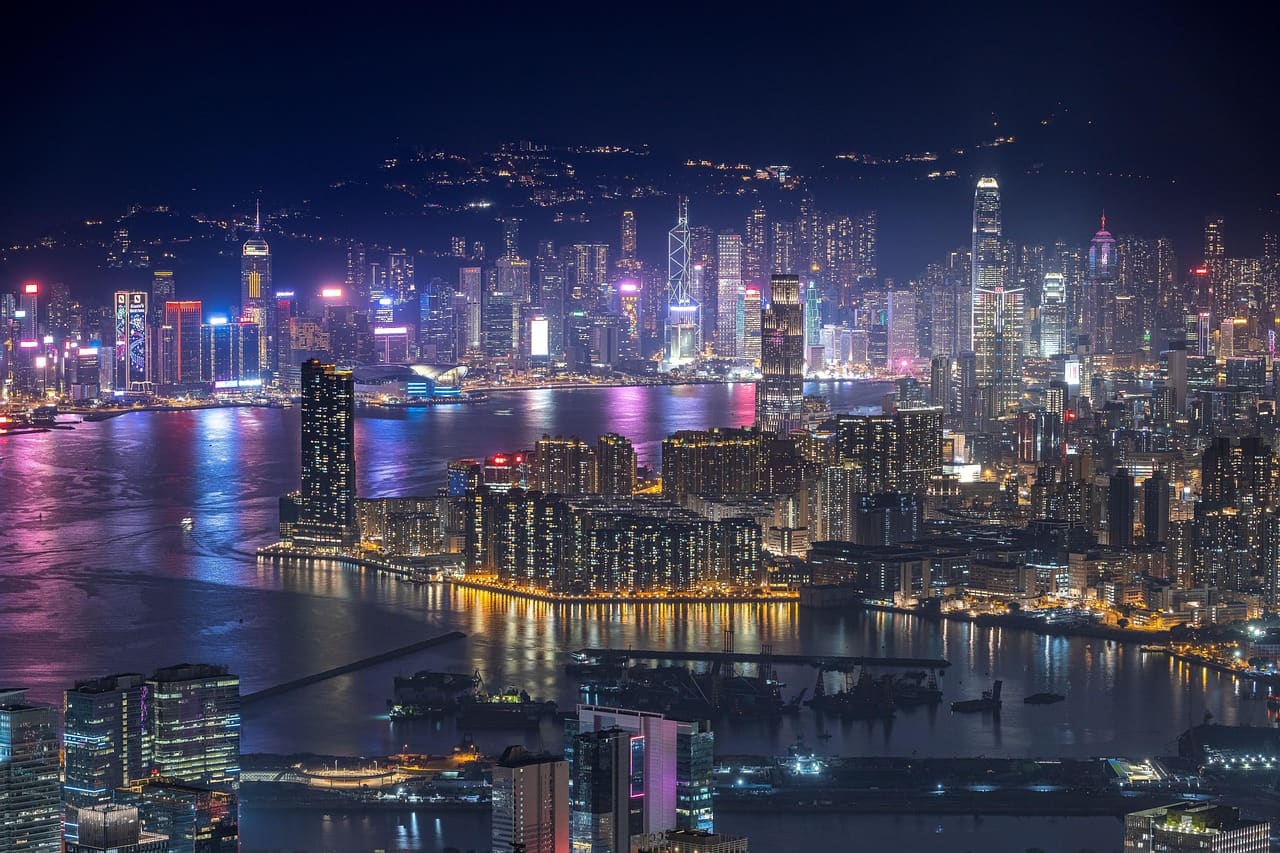
01|First understand the Guangdong-Hong Kong-Macao Greater Bay Area: Why is it suitable to arrange a multi-city trip?
The Guangdong-Hong Kong-Macao Greater Bay Area is located in southern China and consists of nine cities in Guangdong Province, including Guangzhou, Shenzhen, and Zhuhai, and the two special administrative regions of Hong Kong and Macao.
There are high-speed rail, highways, passenger ships and cross-border transportation networks between these cities. For international tourists, the biggest travel advantage of the Greater Bay Area is that they can experience different urban cultures, lifestyles and urban landscapes in one trip without having to take frequent domestic flights.
This guide focuses on four destinations:
Guangzhou
Lingnan culture, historical districts, traditional food and modern urban landscape coexist. Suitable for understanding Guangdong food culture, historical architecture and traditional lifestyle.
Shenzhen
One of China's representative modern innovative cities. Urban architecture, technology industries, art spaces and seaside leisure constitute Shenzhen's main travel features.
Zhuhai
A city known for its coastline, seaside roads and relaxing resort atmosphere. Compared to Guangzhou and Shenzhen, Zhuhai’s travel pace is more relaxed.
Hong Kong Hong Kong
It has an independent urban culture, international business environment, mature public transportation and rich cultural facilities. There are bustling urban landscapes, as well as islands, mountains and seaside trails.
The experiences in the four cities are not the same:
- Guangzhou: Traditional Culture and Lingnan Cuisine.
- Shenzhen: Modern City, Technology and Art.
- Zhuhai: Coastal scenery and leisure vacation.
- Hong Kong: Cosmopolitan City, Cultural Experience and Urban Landscape.
If time permits, it’s easier to combine four cities in one trip than to travel to any one city individually to create a complete Bay Area experience.
02|How many days should you plan to visit the Greater Bay Area for the first time?
Although the four cities have convenient transportation, it does not mean that all destinations can be easily visited in a short period of time.
Cross-city transportation requires time for station transfers, ticket purchase, baggage handling and immigration inspection. In particular, different transportation systems are involved between Guangzhou, Shenzhen, Zhuhai and Hong Kong, and the actual travel time is usually longer than the running time of the train or passenger ship itself.
It is recommended to choose the following arrangements according to your travel rhythm:
| travel time | Recommended arrangements | Suitable for the crowd |
|---|---|---|
| 5–6 days | Guangzhou, Shenzhen, Hong Kong, or Guangzhou, Zhuhai, Hong Kong | Time is limited and I want to experience the core city |
| 7 days | Guangzhou, Shenzhen, Zhuhai, Hong Kong | Hope to cover four cities, but accept a tighter pace |
| 9 days | 2 nights in Guangzhou, 2 nights in Shenzhen, 2 nights in Zhuhai, 2 nights in Hong Kong | First time visiting, hoping to combine city experience and leisure |
| 10–12 days | Four cities plus surrounding extension destinations | Looking to add to your cultural, island or family leisure experience |
For first time visitors, 9 days and 8 nights is recommended.
This arrangement allows each city to have a relatively complete tour time and avoids rushing every day.
If you only have 5–6 days, it is not recommended to squeeze each city into half a day just to cover four cities. You can give priority to Guangzhou, Shenzhen and Hong Kong, or Guangzhou, Zhuhai and Hong Kong, depending on your personal interests.
03|How to get between the four cities? First understand the cross-city transportation network
There are abundant cross-city transportation options in the Greater Bay Area, but the suitable transportation methods vary from city to city.
The most important thing is to choose the mode of transportation based on the origin, destination and accommodation location, rather than blindly pursuing the shortest map distance.
1. Guangzhou-Shenzhen: High-speed rail is the most convenient
There are frequent high-speed rail services between Guangzhou and Shenzhen, making it the easiest section of transportation to arrange between the four cities.
Common departure and arrival stations include:
- Guangzhou South Railway Station
- Shenzhen North Railway Station
- Futian Station
There are high-speed rail services from Guangzhou South Railway Station to Shenzhen North Railway Station and Futian Station. The specific running time depends on the number of trains, stops and destination stations. Some trains run for a shorter time, but the connection time from the city to the station needs to be calculated.
Selection suggestions:
- If you are traveling in southern Guangzhou or Panyu, you may consider Guangzhou South Railway Station.
- If you live near Shenzhen North Railway Station, it is more convenient to choose Shenzhen North Railway Station.
- If the main activity area is in the central area of Futian, Shenzhen, you can check the trains arriving at Futian Station.
Don't just compare train times. Neither Guangzhou South Railway Station nor Shenzhen North Railway Station are centrally located to all major tourist areas, and travel time to hotels and attractions should also be factored into your plan.
2. Shenzhen-Zhuhai: Priority will be given to passenger ships from Shekou to Jiuzhou Port
Shenzhen and Zhuhai are located on the east and west banks of the Pearl River Estuary respectively. In addition to road transportation, you can also cross the Pearl River Estuary by passenger ship.
For tourists, the more straightforward choices are:
Shenzhen Shekou Cruise Home Port → Zhuhai Jiuzhou Port
The common flight time is about 60 minutes, the specific flight time is subject to the actual flight.
Shekou Cruise Home Port is located in Nanshan District, Shenzhen, and Jiuzhou Port is connected to Zhuhai City. After disembarking, you can continue to take a taxi or local public transportation to your hotel and attractions.
The advantages of this route are:
- There is no need to detour through the land route at the Pearl River Estuary.
- The voyage is relatively straightforward.
- Water transportation can be included as part of the travel experience itself.
- Jiuzhou Port is relatively convenient to destinations such as Zhuhai Lovers Road and the city’s business district.
It should be noted that passenger ships do not depart at any time around the clock. Flight schedules will be adjusted based on date, passenger flow and operational arrangements. You should check the actual flight through the operator's ticketing channel before departure.
Shenzhen Municipal Transportation Bureau recommends checking the latest flight information through the "China Merchants Shekou Cruise Home Port" ticket purchase page.
3. Zhuhai-Hong Kong: Hong Kong-Zhuhai-Macao Bridge Shuttle Bus
The most representative cross-border transportation facility between Zhuhai and Hong Kong is the Hong Kong-Zhuhai-Macao Bridge.
Tourists can go from downtown Zhuhai to the Zhuhai Port of the Hong Kong-Zhuhai-Macao Bridge, and then take the Hong Kong-Zhuhai-Macao Bridge shuttle bus to the Hong Kong Port.
Basic process:
- From Zhuhai city to Zhuhai Port of Hong Kong-Zhuhai-Macao Bridge.
- Follow the guidelines to handle exit procedures at Zhuhai Port.
- Purchase or present a Hong Kong-Zhuhai Line shuttle bus ticket.
- Take a bus to the Hong Kong Port via the Hong Kong-Zhuhai-Macao Bridge.
- Go through immigration formalities at the Hong Kong port.
- Take the airport shuttle, public bus or other means of transportation to downtown Hong Kong.
The shuttle bus provides 24-hour service, but the frequency of the shuttle bus will vary from time to time. Taking the current frequency announced by the operator as an example, the frequency between Zhuhai and Hong Kong is about 5-10 minutes during part of the day, and will be longer during the late night period.
Special attention is required:
The departure point of the shuttle bus is not Zhuhai city center or Jiuzhou Port.
If you depart from Zhuhai attractions on the same day, you must reserve time for ground transportation to Zhuhai Port.
Hong Kong-Zhuhai-Macao Bridge Shuttle Bus official website:
https://www.hzmbus.com/hk
Official traffic information of the Hong Kong-Zhuhai-Macao Bridge:
https://www.hzmb.gov.hk/en/cross-boundary.html
4. Hong Kong-Shenzhen: high-speed rail, MTR and land ports
There are many transportation options between Hong Kong and Shenzhen, and it is suitable to choose based on the location of accommodation and the itinerary of the day.
Method A: Guangzhou-Shenzhen-Hong Kong Express Railway
There are high-speed rail services between Hong Kong West Kowloon Station, Shenzhen Futian Station and Shenzhen North Station.
Suitable:
- From downtown Hong Kong to the central area of Shenzhen.
- Carry luggage and hope to reduce ground transportation transfers.
- You need to continue taking the mainland high-speed rail to other cities.
Option B: MTR East Rail Line
You can take the Hong Kong MTR East Rail Line to Luo Wu or Lok Ma Chau Spur Line Port, and then go through immigration procedures to enter Shenzhen.
Suitable:
- The accommodation is located close to the East Rail Line.
- Want to use the MTR network to travel to Shenzhen.
- No need to take the high-speed rail to continue long journeys.
The Lo Wu and Lok Ma Chau branch lines are different land border crossings with different opening hours. Before departure, you should confirm the operational arrangements of the port on the day.
Method C: Shenzhen Bay Port or Huanggang Port
Shenzhen Bay Port is suitable for travelers going to Shenzhen Bay, Nanshan and other areas.
The new joint inspection building at Huanggang Port was officially opened on October 12, 2026, providing 24-hour customs clearance services for passengers and passenger vehicles. The travel inspection service between the old Huanggang Temporary Passenger Clearance Building and Hong Kong's Lok Ma Chau Control Point has been suspended and cannot continue to be arranged along the old port route.
The connection methods, customs clearance time and transportation services at different ports are different. When traveling late at night, especially check whether cross-border buses and city connections are still operating.
5. Guangzhou-Zhuhai: High-speed rail is also a feasible option
If you do not pass through Shenzhen, you can also go directly from Guangzhou to Zhuhai.
Common routes are:
Guangzhou South Railway Station → Zhuhai Railway Station
This route is suitable for traveling directly from Guangzhou to Zhuhai, reducing the time spent detouring around Shenzhen.
Zhuhai Station is located near Gongbei. After arriving, you can continue to Lovers Road, Xiangzhou and other areas.
If you plan to visit Shenzhen and Zhuhai, you can use the combination of Guangzhou-Shenzhen high-speed rail and Shenzhen-Zhuhai passenger ship.
A quick check on transportation options in the four cities
| City combination | Recommended transportation methods | Main departure or arrival points |
|---|---|---|
| Guangzhou—Shenzhen | high speed rail | Guangzhou South, Shenzhen North, Futian |
| Guangzhou—Zhuhai | high speed rail | Guangzhou South, Zhuhai |
| Shenzhen—Zhuhai | passenger ship | Shekou Cruise Home Port, Jiuzhou Port |
| Zhuhai—Hong Kong | Hong Kong-Zhuhai-Macao Bridge Shuttle Bus | Zhuhai Port, Hong Kong Port |
| Hong Kong—Shenzhen | High-speed rail, MTR, cross-border buses | West Kowloon, Futian, Luo Wu, Lok Ma Chau Branch, Shenzhen Bay, Huanggang |
04|The most recommended 9 days and 8 nights route: Guangzhou → Shenzhen → Zhuhai → Hong Kong
If you want to experience four cities at once without having to rush every day, you can arrange them in the following order:
Guangzhou (2 nights) → Shenzhen (2 nights) → Zhuhai (2 nights) → Hong Kong (2 nights)
The advantages of this route are:
- Starting from Guangzhou, first adapt to the transportation and urban environment in mainland China.
- Travel to Shenzhen via high-speed rail to reduce the uncertainty of land transportation.
- Travel from Shenzhen to Zhuhai via passenger ship and experience water transportation at the Pearl River Estuary.
- Finally, enter Hong Kong via the Hong Kong-Zhuhai-Macao Bridge, completing the cross-border travel from mainland cities to Hong Kong.
- Take an international flight directly from Hong Kong to avoid repeated turnarounds.
Day 1|Arrived in Guangzhou: Starting from Lingnan City
It is recommended not to arrange too many attractions on the first day.
After arriving in Guangzhou, check in at the hotel and arrange relaxing city activities according to your arrival time.
Consider:
- Beijing Road Pedestrian Street: Learn about Guangzhou’s traditional commercial district.
- Zhujiang New Town: Feel the modern urban architecture of Guangzhou.
- Along the Pearl River: Enjoy the night view of the city.
If the international flight arrives late, it is recommended to only arrange check-in and dining nearby.
Day 2|Guangzhou: Historic District, Traditional Architecture and Lingnan Food
The second day can focus on experiencing the history and culture of Guangzhou.
Recommended arrangements:
Morning: Chen Family Ancestral Hall
The Chen Clan Ancestral Hall is one of the representative traditional buildings in Guangzhou. Its architectural decoration reflects the folk craftsmanship and traditional aesthetics of the Lingnan region.
Afternoon: Yongqingfang and Lychee Bay area
Here you can see the different faces of Guangzhou’s traditional neighborhoods, arcades and old city living spaces.
If you like historical buildings, you can also arrange Shamian on the same day, but you should choose based on the actual visit time. It is not recommended to cram all areas into half a day.
Evening: Zhujiang New Town or Pearl River Night View
You can choose to take a walk along the Pearl River or dine in the city's business district.
Another part of Guangzhou worth experiencing is the food culture. Morning tea, barbecued pork, rice rolls, wonton noodles, etc. are all entrances to understand the local lifestyle.
Day 3|Guangzhou → Shenzhen: From history and culture to modern city
After breakfast, go to Guangzhou South Railway Station and take the high-speed train to Shenzhen.
It is recommended to check into the hotel first after arriving in Shenzhen, and then arrange city activities in the afternoon and evening.
Recommended areas:
- Futian Central District: Modern urban architecture and commercial center.
- Lianhuashan Park: Observing Shenzhen’s urban space from an urban green space.
- Around the Civic Center: Suitable for arranging urban architecture and public space experience.
In the evening, you can go to the Shenzhen Bay area to experience the seaside city atmosphere of Shenzhen that is different from Guangzhou.
Day 4|Shenzhen: modern art, urban space and seaside scenery
The focus of travel to Shenzhen should not only be shopping malls and skyscrapers.
Can be arranged according to interest:
Option A: Modern City and Art
- OCT Creative Culture Park (OCT-LOFT)
- Nanshan District Urban Business District
- Shenzhen Bay Cultural and Public Space Surroundings
Option B: City Parks and Waterfront
- Shenzhen Bay Park
- Talent Park
- Houhai and Shenzhen Bay area
If you like modern architecture, urban planning and public spaces, Shenzhen is a city worth observing.
Day 5|Shenzhen → Zhuhai: Take a boat across the Pearl River Estuary
It is recommended to choose the passenger ship from Shekou to Zhuhai Jiuzhou Port on this day.
Confirm the ferry ticket, terminal and actual departure time before departure, and reserve time from the hotel to the Shekou cruise home port.
After arriving at Jiuzhou Port, go to your hotel in Zhuhai city.
In the afternoon you can arrange:
- lovers road
- Zhuhai Fisher Girl
- seaside park
If the weather is suitable, you can take a walk along the coastline and experience Zhuhai's relatively relaxed urban rhythm.
Day 6|Zhuhai: Coastal Scenery and City Leisure
Zhuhai is suitable for a slower-paced day.
Recommended route:
Morning: Lovers Road and Zhuhai Fishing Girl
Admire the scenery of the Pearl River Estuary along the coastline and feel the characteristics of Zhuhai's coastal city.
Afternoon: Zhuhai Grand Theater and Yeli Island
The Zhuhai Grand Theater is highly recognizable due to its unique architectural shape and is a representative urban landmark of Zhuhai.
Evening: Waterfront dining or city business district
Seafood, Cantonese or local specialty meals can be arranged.
If you are traveling with children, you can also consider Hengqin Chimelong Ocean Kingdom based on your time and interests, but you need to reserve sufficient time for the visit separately, and it is not recommended to squeeze in too many urban attractions on the same day.
Day 7 | Zhuhai → Hong Kong: Enter Hong Kong via the Hong Kong-Zhuhai-Macao Bridge
After breakfast, depart from the hotel and head to the Zhuhai Port of the Hong Kong-Zhuhai-Macao Bridge.
After completing the Zhuhai exit procedures, take the Hong Kong-Zhuhai-Macao Bridge shuttle bus to the Hong Kong port.
After arriving in Hong Kong, take public transportation to the hotel.
It is not recommended to arrange too many attractions on the day. You can choose:
- Tsim Sha Tsui Waterfront
- victoria harbor
- Avenue of Stars
- Around the Hong Kong Cultural Center
You can enjoy the night view of Victoria Harbor at night.
Day 8|Hong Kong: Urban Culture and Classic Landscapes
Hong Kong can be divided into two main tourist directions: Hong Kong Island and Kowloon according to personal interests.
Morning: Central and Hong Kong Island
- Central District
- Around the Mid-Levels Escalator
- Victoria Peak (Decide whether to go depending on weather and visibility)
Afternoon: West Kowloon Cultural District
- West Kowloon Cultural District
- M+ Museum
- Hong Kong Palace Museum
Specific visit arrangements need to be confirmed in advance based on opening hours and ticket availability.
Evening: Tsim Sha Tsui and Victoria Harbor
You can choose to take the Star Ferry or enjoy the night view of Hong Kong on the promenade.
Day 9|Hong Kong: Departure
Head to Hong Kong International Airport according to international flight times.
If you are departing from Hong Kong International Airport, it is recommended to confirm the transportation method from the hotel to the airport in advance, and reserve sufficient time for urban transportation and airport procedures.
05|If time is limited, how to compress it into 7 days?
If you only have a week, here's what you can do:
| date | City | Main arrangements |
|---|---|---|
| Day 1 | Guangzhou | Arrival, Beijing Road or Zhujiang New Town |
| Day 2 | Guangzhou | Chen Clan Ancestral Hall, Yongqingfang, Shamian |
| Day 3 | Shenzhen | High-speed train to Shenzhen and visit Futian or Nanshan |
| Day 4 | Zhuhai | Take a boat from Shekou, Shenzhen to Zhuhai and visit Lovers Road |
| Day 5 | Zhuhai, Hong Kong | Activities in Zhuhai city, heading to Hong Kong via the Hong Kong-Zhuhai-Macao Bridge |
| Day 6 | Hongkong | Central, Victoria Peak, Victoria Harbor |
| Day 7 | Hongkong | Cultural area or shopping, preparing to leave the country |
The disadvantage of this version is that Shenzhen only has a shorter tour time, and Zhuhai does not have a full two days.
If Shenzhen is the focus of your trip, you can shorten Zhuhai to one day; if you prefer seaside and leisure, you can reduce your stay in Shenzhen.
It is not recommended to change hotels frequently just to check in one more city.
06|The most important part: What documents and visa issues do foreign tourists need to pay attention to when traveling across the mainland and Hong Kong?
This is the most easily overlooked part of the entire Greater Bay Area itinerary and the one that needs to be verified in advance.
Mainland China and Hong Kong implement different entry and exit management systems.
Guangzhou, Shenzhen, and Zhuhai belong to mainland China; the Hong Kong Special Administrative Region has an independent immigration management system.
Therefore, foreign tourists cannot simply think that with a Chinese visa, they can freely enter all Bay Area cities and Hong Kong.
1. Mainland China visa and Hong Kong entry qualifications need to be confirmed separately
There are two issues you need to check before departure:
First: Can I enter mainland China?
It is necessary to confirm whether it complies with China's unilateral visa exemption and mutual visa exemption arrangements based on the nationality of the passport, or whether it is necessary to apply for a Chinese visa in advance.
Second: Can I enter Hong Kong?
The Immigration Department of the Hong Kong SAR stipulates different visa-free stay periods and visa requirements based on the nationality and travel documents of the passengers.
Some foreign passports can enter Hong Kong visa-free, some require a visa to visit Hong Kong in advance, and some nationalities may need to complete online pre-arrival registration.
Hong Kong entry qualifications cannot be judged solely based on Mainland China’s signature-free form.
2. Special note: After entering the mainland from Hong Kong and then returning to Hong Kong, re-entry qualifications may be involved.
This is where problems are most likely to arise when arranging a combined trip to Guangzhou, Shenzhen, Zhuhai and Hong Kong.
Let's say your route is:
Hong Kong → Shenzhen → Guangzhou → Zhuhai → Hong Kong
You need to confirm whether you are eligible to re-enter Hong Kong after leaving the Mainland, and whether you can re-enter the Mainland after leaving the Mainland.
For example:
- If you are using a Chinese single-entry visa, after entering the mainland for the first time, leaving the country may consume the number of entries.
- If you are using a multiple-entry visa, you need to check the validity period and the number of remaining entries.
- If you use China’s visa-free policy, you need to confirm whether re-entry after leaving the country still meets the policy conditions.
- If you use the 240-hour transit visa exemption, it cannot be regarded as an ordinary visa that allows you to enter and exit the mainland repeatedly.
Therefore, it is recommended to determine the entry sequence for the entire trip before booking cross-city transportation and hotels.
3. Can the 240-hour transit visa exemption be used for travel in the Greater Bay Area?
Qualified foreign tourists can take advantage of the 240-hour transit visa-free policy for short-term travel in mainland China, provided they meet the regulations.
As of November 2026, the applicable countries announced by the National Immigration Administration are 57, and the areas where stay activities are allowed include Guangdong Province.
Applicable ports in Guangdong Province include Guangzhou Baiyun International Airport, Shenzhen Baoan International Airport, Shekou Port, Guangzhou Pazhou Passenger Port, Zhuhai Port, Hengqin Port, Hong Kong-Zhuhai-Macao Bridge Port, Huanggang Port, Luohu Port, Zhongshan Port, etc.; the Guangzhou-Shenzhen-Hong Kong High-speed Railway West Kowloon Station Port has also been included in the list of applicable ports.
However, special attention should be paid to the clear applicable conditions for the 240-hour transit visa exemption:
- Must belong to the 57 applicable countries specified in the policy.
- Hold a valid ordinary passport, and the validity period of the certificate meets the policy requirements.
- A connecting ticket or related certificate with a confirmed date and itinerary to a third country (region).
- Must meet the transit conditions from one country or region to another country or region via mainland China.
- Ports of entry and areas of stay must comply with policy regulations.
- The actual ability to enter the country is subject to the review of the port and border inspection authorities.
Hong Kong can participate in transit itineraries as a different region from Mainland China, but the 240-hour policy cannot therefore be understood as a free travel permit between Hong Kong and the Mainland.
For example:
- Traveling from overseas, entering mainland China, heading to Hong Kong, and then traveling from Hong Kong to another country or region may meet relevant transit conditions, but the complete itinerary and applicable qualifications still need to be verified.
- If you enter mainland China from Hong Kong and then use Hong Kong as the original route to return to your destination, you cannot simply follow the 240-hour transit visa exemption arrangement.
- If you have used the 240-hour transit visa exemption to leave the mainland, you cannot continue to use the same temporary entry permit to enter the mainland again.
For tourists who plan to depart from Hong Kong, visit mainland cities, and finally return to Hong Kong, it is recommended to first confirm whether they hold an applicable Chinese visa or meet other independent visa-free arrangements.
4. How to calculate the transit visa-free stay time?
The period of stay for the 240-hour transit visa exemption does not simply start from the time of landing of the arriving flight.
According to the policy explanation announced by the National Immigration Administration, the length of stay is calculated from 0:00 on the next day of entry.
However, tourists should still arrange their departure according to the actual entry permit and the time limit approved by the border inspection agency, and do not calculate the final departure time based on flight time.
5. Do foreign tourists need to fill in the China Entry Card in advance?
Starting from November 20, 2025, foreign tourists can fill in the entry card information in advance through the relevant online channels of the National Immigration Administration.
If you do not have the conditions to fill in the form online, you can also fill in the form according to the on-site instructions after arriving at the port, or fill in the paper immigration card in accordance with the regulations.
It is recommended to check the latest entry card filling instructions of the National Immigration Administration before departure to avoid leaving the entry procedures until you arrive at the port.
Official entrance:
https://s.nia.gov.cn/ArrivalCardFillingPC/
07|Practical operation of cross-border transportation: How to arrange tickets, ports and luggage?
1. Where should I buy high-speed rail tickets?
Tickets for high-speed rail in mainland China can be purchased through the official China Railway 12306 platform.
Foreign tourists can use valid passports that meet the requirements to purchase real-name tickets.
Need to pay attention to:
- The passport information filled in when purchasing tickets must be accurate.
- Bring the passport you used to purchase the ticket with you when boarding.
- Stations may require manual identity verification.
- The cross-border high-speed rail at Hong Kong West Kowloon Station also has real-name ticket purchase and identity verification requirements.
- It is recommended to purchase tickets in advance during holidays and popular periods.
China Railway 12306 English Service:
https://www.12306.cn/en/
If you need to know the complete operations of purchasing tickets with foreign passports, real-name verification, ticket changes and refunds, you can refer to the "China High-Speed Rail Travel Guide" already available on the website. There is no need to repeat the entire process in this article.
2. How early should a passenger ship arrive at the dock?
Passenger ships from Shenzhen Shekou to Zhuhai Jiuzhou Port are cross-city water transportation. It is recommended to confirm in advance:
- Actual departure port.
- The departure time on the ticket.
- Boating document requirements.
- Baggage regulations.
- Do you need to go through relevant procedures in advance?
Do not consider passenger ship sailing time as a complete door-to-door travel time.
For example, the common voyage from Shekou to Jiuzhou Port takes about 60 minutes, but additional time is required from the Shenzhen hotel to the Shekou cruise home port, check-in procedures, and the transfer after arriving at Jiuzhou Port.
3. Do I need to book tickets in advance for the Hong Kong-Zhuhai-Macao Bridge shuttle bus?
Tickets can be purchased through official ticket sales channels or according to on-site arrangements.
However, during holidays, weekends and times with heavy passenger flow, it is recommended to confirm the flight schedule and ticket purchase method in advance.
Shuttle buses mainly connect:
- Hong Kong Port
- Zhuhai Port
- Macao Port
It should be noted that the Hong Kong-Zhuhai-Macao Bridge shuttle bus does not run directly from downtown Hong Kong to downtown Zhuhai.
Additional ground transportation needs to be arranged from Hong Kong city to Hong Kong Port and from Zhuhai Port to Zhuhai city.
4. Port opening hours need to be checked in advance
The opening hours of different ports in Hong Kong are different.
For example, the port information published by the Hong Kong Immigration Department shows:
- Luohu Port: 06:30 to 24:00.
- Lok Ma Chau branch port: 06:30 to 22:30.
- Hong Kong West Kowloon High Speed Rail Station Port: 06:30 to 23:30.
- Hong Kong-Zhuhai-Macao Bridge Hong Kong Port: Open 24 hours a day.
- Huanggang Port: Open 24 hours a day.
It should be noted that the new joint inspection building at Huanggang Port has been opened on October 12, 2026, and the travel inspection service between the old Huanggang temporary travel inspection building and Hong Kong's Lok Ma Chau Control Point has been suspended.
The above port opening hours do not mean that all relevant means of transportation will operate at the same time. When traveling late at night, check the subway, cross-border bus and urban connection arrangements.
5. How should luggage be arranged?
It is necessary to change transportation multiple times between the four cities, so it is recommended to minimize bulky luggage.
A more reasonable approach:
- Choose accommodation close to major transport links or metro stations.
- Before each cross-city move, make sure your luggage complies with transportation regulations.
- Do not pack important travel documents in checked luggage.
- If you need to take a boat from Shenzhen to Zhuhai, check the baggage regulations of the passenger boat operator in advance.
- If you enter Hong Kong from Zhuhai via the Hong Kong-Zhuhai-Macao Bridge, allow time for luggage handling and port clearance.
For a trip of around 9 days, it's usually more convenient to use one medium-sized suitcase and carry-on backpack than to carry multiple large suitcases.
08|Where to live in the four cities? How to choose an accommodation area?
Accommodation location will directly affect the efficiency of cross-city transportation.
It is recommended not to choose accommodation based solely on hotel prices, but to consider the day's tour area, transportation stops, and departure point for the next leg of the itinerary.
Guangzhou: It is recommended to choose a central area with convenient transportation
You can focus on considering:
- Tianhe: Rich in commercial facilities and convenient transportation, suitable for modern urban experience.
- Yuexiu: Close to traditional urban areas and some historical attractions.
- Liwan: Suitable for tourists who like old Guangzhou culture and traditional neighborhoods.
If you need to take the high-speed train departing from Guangzhou South Railway Station during your itinerary, you don’t have to live near Guangzhou South Railway Station. Choosing a central area with good transportation is usually better for traveling.
Shenzhen: Futian or Nanshan are more suitable
Futian
Ideal for travelers who want easy access to city centres, transport hubs and business districts.
Nanshan
Suitable for tourists who like modern cities, Shenzhen Bay, seaside parks and creative cultural spaces.
If you plan to take a boat from the Shekou cruise home port to Zhuhai the next day, you can consider choosing accommodation in Nanshan or Shekou to reduce the time you spend going to the dock that day.
Zhuhai: Xiangzhou and along Lovers Road
Accommodation options in Zhuhai can be decided according to the purpose of travel:
- Xiangzhou: Suitable for urban life, dining and transportation connections.
- Along Lovers' Road: suitable for seaside leisure and city views.
- Gongbei: Suitable for tourists who need to go to the port or surrounding transportation hubs.
- Hengqin: Suitable for family tourists whose main purpose is to vacation in Chimelong Ocean Kingdom and surrounding areas.
If you plan to go to Hong Kong via the Hong Kong-Zhuhai-Macao Bridge, you should calculate the distance from your hotel to the Zhuhai Port in advance.
Hong Kong: Tsim Sha Tsui, Central, Wan Chai or West Kowloon
Tsim Sha Tsui
Suitable for tourists visiting Hong Kong for the first time. Dining, shopping, seaside views and transportation are all relatively convenient.
Central and Sheung Wan
Suitable for tourists who like urban culture, business districts, historical buildings and the living atmosphere of Hong Kong Island.
Wanchai
With convenient transportation, it is suitable for tourists who want to do activities on Hong Kong Island while taking into account the accommodation budget.
West Kowloon
Suitable for tourists who need to take the high-speed rail to leave Hong Kong, or plan to visit the West Kowloon Cultural District.
Accommodation prices and regions in Hong Kong vary greatly. It is recommended to determine the main tourist areas before choosing a hotel.
09|How should you consider your travel budget?
The convenient transportation in the Guangdong-Hong Kong-Macao Greater Bay Area does not mean that the consumption levels in the four cities are the same.
Guangzhou, Shenzhen and Zhuhai use RMB; Hong Kong mainly uses Hong Kong dollars.
Travel budget suggestions are divided into the following sections:
1. Inter-city transportation
Mainly include:
- Guangzhou to Shenzhen high-speed rail.
- Passenger ship from Shenzhen to Zhuhai.
- Shuttle bus from Zhuhai to Hong Kong-Zhuhai-Macao Bridge.
- Transportation from Hong Kong to the airport or other destinations.
2. Intra-city transportation
Mainly include:
- subway.
- Public buses.
- taxi.
- Transportation between attractions.
If the accommodation area is chosen appropriately, both intra-city transportation costs and commuting time can be controlled.
3. Accommodation
Accommodation prices in the four cities are affected by seasons, holidays, exhibitions, performances and large-scale events.
The accommodation budget in Hong Kong especially needs to be arranged in advance.
4. Catering
Guangzhou and Zhuhai are suitable for experiencing Cantonese cuisine and seafood, Shenzhen has a richer urban dining options, and Hong Kong can experience tea restaurants, dim sum and international catering.
5. Attractions and cultural experiences
Tickets and reservation rules for different attractions are different.
Some museums, exhibitions and large-scale events require reservations or ticket purchases in advance. It is recommended that events requiring fixed admission times be confirmed in the first half of the itinerary.
10|What else should foreign tourists prepare in advance when traveling in the Greater Bay Area?
1. Payment method
Guangzhou, Shenzhen and Zhuhai mainly use RMB, while Hong Kong mainly uses Hong Kong dollars.
The mobile payment system in mainland China is different from that in Hong Kong. It is recommended to confirm whether your bank card, mobile payment account and cash arrangement can cover the entire trip before departure.
If you are not familiar with Alipay, WeChat Pay and overseas bank card binding methods, you can refer to the Chinese payment guide already available on the website.
2. Mobile network and communications
When traveling in the Mainland and Hong Kong, you need to confirm whether your mobile phone plan supports the networks in both places.
Some overseas roaming packages can cover the Mainland and Hong Kong, but not all packages include these two regions.
If using a local SIM card or eSIM, you should check coverage, data volume and validity period in advance.
3. Maps and Navigation
In mainland China, it is recommended to prepare map tools suitable for local use in advance.
In Hong Kong, you can use local public transportation inquiry services and common map applications.
When traveling across cities, it is recommended to save the Chinese names of stations, terminals, ports and hotels to avoid looking for destinations based on English addresses only.
4. Travel insurance
It is recommended to purchase travel insurance covering Mainland China and Hong Kong.
In particular, you need to confirm:
- Medical coverage.
- Accident coverage.
- Baggage delay or loss coverage.
- Flight and transportation delay coverage.
- Whether risks related to cross-border travel are covered.
Don’t judge whether Hong Kong and Mainland China are covered based solely on the name of the insurance product. You should check the geographical scope and liability limits in the specific insurance terms.
5. Weather and seasons
The Greater Bay Area has a subtropical monsoon climate.
Summer is usually hot and humid, and rainy season and typhoon weather may affect passenger ships, cross-border transportation and outdoor activities.
Winter is generally mild, but wet and cold weather is possible.
If you plan to take the Shenzhen-Zhuhai passenger ship or the Hong Kong-Zhuhai-Macao Bridge shuttle bus, you should pay attention to the weather and operating announcements before departure.
11|Which tourists are suitable for visiting four cities at one time?
International tourists coming to China for the first time
If you want to understand the development, culture and lifestyle of cities in southern China, the combination of four cities can provide a richer experience.
Tourists who like urban culture and architecture
Guangzhou's historical buildings, Shenzhen's modern urban space, and Hong Kong's international urban landscape can form a sharp contrast.
Tourists who love food
Guangzhou, Shenzhen, Zhuhai and Hong Kong all have a wealth of Cantonese cuisine and local dining options, making them ideal for combining city travel with a dining experience.
Family Travelers
Depending on the age and interests of family members, you can choose from Guangzhou cultural experience, Shenzhen city leisure, Zhuhai seaside vacation, as well as cultural facilities or theme parks in Hong Kong.
Tourists wishing to reduce domestic flights
The four cities can be connected by high-speed rail, passenger ships and cross-border buses. There is no need to take frequent flights to move between cities.
However, if the travel time is only a few days, it is still recommended to reduce the number of destinations and avoid over-compressing the visit time.
12|FAQs for foreign tourists visiting the Guangdong-Hong Kong-Macao Greater Bay Area
Q1: For my first time in China, can Guangzhou, Shenzhen, Zhuhai and Hong Kong be arranged in one trip?
Can.
There are high-speed rail, passenger ships and cross-border buses between the four cities, making it suitable for combining into a multi-city trip.
It is recommended to arrange about 9 days so that you can experience the four cities relatively calmly.
Q2: Do I need to fly from Guangzhou to Shenzhen?
Usually not required.
There are intensive high-speed rail services between Guangzhou and Shenzhen, and high-speed rail is a more convenient option.
Q3: From Shenzhen to Zhuhai, is it more convenient to take a boat or drive?
If the departure point is near Nanshan or Shekou in Shenzhen, you can consider taking a passenger ship to Zhuhai Jiuzhou Port. The common journey is about 60 minutes.
If the departure point is not near Shekou, you can compare the door-to-door times of passenger ship and land transportation, and then decide which method to use.
Q4: When going from Zhuhai to Hong Kong, do I have to pass through Macau?
unnecessary.
You can go directly to and from the Hong Kong-Zhuhai-Macao Bridge via the shuttle bus between Zhuhai Port and Hong Kong Port, without entering Macau first.
Q5: Can I enter Hong Kong directly with a Chinese visa?
It cannot be understood this way.
Hong Kong has an independent immigration management system. Foreign tourists need to separately confirm Hong Kong’s visa-free treatment or visa requirements based on their passport, nationality and travel documents.
Q6: Can I enter Guangzhou, Shenzhen and Zhuhai with visa-free treatment from Hong Kong?
You cannot enter mainland China solely by virtue of Hong Kong’s visa-free treatment.
To enter Guangzhou, Shenzhen and Zhuhai, you need to comply with the visa or visa-free policy of mainland China.
Q7: Can the 240-hour transit visa exemption cover Guangzhou, Shenzhen and Zhuhai?
Guangdong Province is one of the areas where 240-hour transit visa exemption allows stay activities.
However, passengers must meet the applicable nationality, valid passport, connecting itinerary to a third country or region, designated port, etc.
Just because the nationality of the passport complies with the list does not mean that the policy can be used.
Q8: If I enter Shenzhen from Hong Kong, then go to Guangzhou and Zhuhai, and finally return to Hong Kong, can I use the 240-hour transit visa exemption?
This cannot be judged directly.
The 240-hour transit visa exemption requires transit from one country or region to another country or region via mainland China. If Hong Kong is both the departure area and the final return area for a mainland trip, this round trip cannot simply be regarded as a qualifying transit trip.
The complete international itinerary, port of entry and departure destination should be confirmed in advance with the National Immigration Administration of China or the relevant port.
Q9: Can I take the high-speed rail from Hong Kong to Shenzhen?
Can.
You can take the Guangzhou-Shenzhen-Hong Kong Express Rail Link from Hong Kong West Kowloon Station to Shenzhen Futian Station or Shenzhen North Station. The actual number of trains shall prevail.
Q10: Are there passenger ships from Shenzhen to Zhuhai every day?
There are passenger routes from Shekou to Zhuhai Jiuzhou Port, but the specific flights, frequency and fares will be adjusted depending on the date.
You should check the information on the day of travel through the "China Merchants Shekou Cruise Home Port" ticket purchase page.
Q11: Does the Hong Kong-Zhuhai-Macao Bridge shuttle bus operate 24 hours a day?
The Hong Kong-Zhuhai-Macao Bridge shuttle bus provides 24-hour service, but the bus intervals are different at different times.
If traveling late at night, you should confirm the actual flight schedule in advance and consider the customs clearance arrangements at the two places.
Q12: Do I need to change hotels every time between the four cities?
uncertain.
Guangzhou, Shenzhen, Zhuhai and Hong Kong are relatively close, but traveling between cities every day still takes up a lot of time.
It is more recommended to move in the order of the route, arranging 1-2 nights in each city to reduce repeated turns.
Q13: Can I go directly to Zhuhai from Hong Kong International Airport?
Relevant transportation services via the Hong Kong-Zhuhai-Macao Bridge can be considered, but they need to be confirmed based on actual flights, ports and operator arrangements.
If you plan to go directly to Zhuhai after arriving at Hong Kong Airport, you should pay special attention to the connection method between the airport and the Hong Kong port, and whether you meet the relevant entry and transfer conditions.
13|Checklist before departure: Check the things that are most likely to be missed during cross-city travel
Documents and Entry
- Confirm entry qualifications from Mainland China.
- Confirm Hong Kong entry qualifications.
- Check China visa validity and number of entries.
- If using the 240-hour transit visa exemption, confirm that the complete international itinerary complies with the policy.
- Confirm passport validity and other entry requirements.
transportation
- Confirm the number of high-speed rail trains from Guangzhou to Shenzhen.
- Confirm the passenger ship schedule from Shenzhen Shekou to Zhuhai Jiuzhou Port.
- Confirm the shuttle bus arrangement from Zhuhai Port to Hong Kong Port.
- Confirm departure transportation from Hong Kong to the airport.
- Allow time for station, terminal and port connections.
stay
- Confirm your stay dates in each city.
- Give priority to accommodation areas with convenient transportation.
- Confirm check-in and check-out times.
- Check the distance between your hotel and the starting point of the next stretch of transportation.
Travel Preparation
- Prepare payment methods applicable to Mainland China and Hong Kong.
- Confirm mobile network coverage.
- Save the Chinese names of stations, terminals and ports.
- Purchase applicable travel insurance.
- Pay attention to weather, typhoon and traffic operation announcements.
Conclusion|Use one trip to experience four types of urban life in the Greater Bay Area
The attraction of the Guangdong-Hong Kong-Macao Greater Bay Area is not only the closer distance between cities, but also the differences in culture, architecture, lifestyle and travel experience between different cities.
In Guangzhou, you can experience Lingnan culture and traditional food; in Shenzhen, you can observe the development of modern Chinese cities; in Zhuhai, you can slow down and enjoy the coastline and urban leisure; in Hong Kong, you can experience another kind of international urban life.
If time permits, it is recommended to use an open itinerary entering Guangzhou and departing from Hong Kong, visiting Guangzhou, Shenzhen, Zhuhai and Hong Kong in sequence.
But before booking transportation, you must first confirm your entry qualifications from mainland China and Hong Kong, and whether you need a multiple-entry visa or meet the corresponding visa exemption conditions.
A truly smooth trip to the Greater Bay Area is not about checking in as many cities as possible, but about connecting the four cities naturally under the correct traffic sequence and entry conditions.