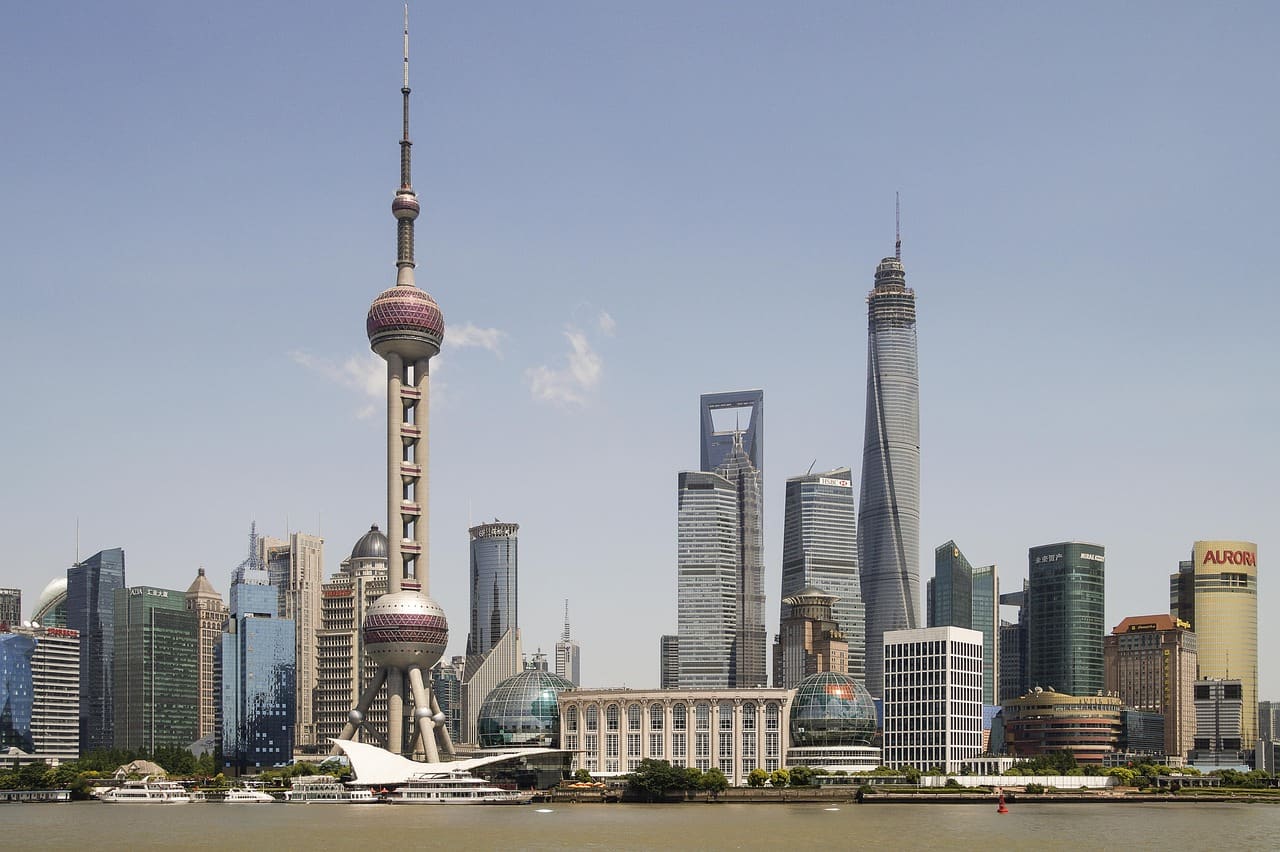
Shanghai is an important aviation gateway for foreign tourists entering China. Whether flying from Europe, North America, Australia or Southeast Asia to other cities in China, Shanghai is likely to become a transit point on international routes.
If there is a gap of 1-3 days between the two flights, instead of staying at the airport all the time, it is better to use this time to get to know Shanghai: from the modern architecture of the Bund and the skyline of the Huangpu River, to the Jiangnan gardens of Yu Garden, to the Wutong District on Wukang Road and the water town life of Zhujiajiao.
For eligible foreign travelers, China’s 240-hour transit visa-free policy facilitates this short stay. However, to truly arrange a smooth Shanghai transfer trip, three issues need to be solved first:
- Are you eligible for the 240-hour transit visa exemption?
- After arriving from Pudong or Hongqiao Airport, how to travel to and from the city efficiently?
- With only 1–3 days, how can we arrange an itinerary that balances the experience with subsequent flights?
This guide is based on actual entry procedures, length of stay and transportation methods to help international travelers organize an ordinary transfer into a complete Shanghai city experience.
01|Confirm eligibility first: Which passengers are eligible for the 240-hour transit visa exemption?
Policy information for November 2, 2026
Starting from December 17, 2024, China will extend the transit visa-free stay time for people from some countries to 240 hours, or 10 days.
As of August 20, 2026, the National Immigration Administration has once again expanded the scope of applicable countries, increasing the number of applicable countries for 240-hour transit visa exemption to 57.
Qualified foreign tourists can apply for visa-free temporary entry at designated ports and stay in the specified area for no more than 240 hours to engage in short-term activities such as tourism, business, visits, and family visits.
1. Which countries’ passports can I apply for?
The current 57 applicable countries are as follows:
| area | nation |
|---|---|
| Europe (40 countries) | Austria, Belgium, Czech Republic, Denmark, Estonia, Finland, France, Germany, Greece, Hungary, Iceland, Italy, Latvia, Lithuania, Luxembourg, Malta, Netherlands, Poland, Portugal, Slovakia, Slovenia, Spain, Sweden, Switzerland, Monaco, Russia, United Kingdom, Ireland, Cyprus, Bulgaria, Romania, Ukraine, Serbia, Croatia, Bosnia and Herzegovina, Montenegro, North Macedonia, Albania, Belarus, Norway |
| America (6 countries) | United States, Canada, Brazil, Mexico, Argentina, Chile |
| Oceania (2 countries) | Australia, New Zealand |
| Asia (9 countries) | South Korea, Japan, Singapore, Brunei, United Arab Emirates, Qatar, Indonesia, Vietnam, Kyrgyzstan |
Among them, Vietnam and Kyrgyzstan are the two new countries added on August 20, 2026.
Special reminder: The countries mentioned here are applicable to the 240-hour transit visa exemption, which does not mean that all foreign tourists must use this policy to enter China.
Some countries also apply China's unilateral visa exemption policy or bilateral mutual visa exemption agreements. Passengers who are eligible for other visa-free policies should decide which policy is more suitable for them based on their nationality, purpose of entry and length of stay.
2. What conditions must be met?
To qualify for the 240-hour transit visa-free policy, you usually need to meet the following conditions at the same time:
First, hold an ordinary passport from the applicable country.
- The passport is valid for no less than 3 months.
- Hold valid international travel documents that meet the requirements.
- Meet the entry conditions of the final destination country or region.
Second, it must be a truly international transit trip.
This is where it is most easily misunderstood.
Passengers must depart from one country or region and travel to another country or region via China.
For example:
- United States → Shanghai → Singapore: Meets the basic requirements for transit itineraries in third countries (regions).
- United Kingdom → Shanghai → Australia: Meets the basic requirements for transit itineraries in third countries (regions).
- Singapore → Shanghai → Japan: Meets the basic requirements for transit itineraries in third countries (regions).
- United States → Shanghai → United States: This transit condition is not met.
- UK → Shanghai → UK: This transit condition is not met.
The key point of judgment is whether China is located between two different countries or regions, not whether the passenger purchased two flights.
Third, hold an onward ticket or relevant certificate with a confirmed date and itinerary.
It must be able to prove that the passenger will leave China within 240 hours and go to a third country or region.
It is recommended to prepare:
- International flight confirmation form entering China;
- Flight confirmation slip leaving China for a third country or region;
- Complete itinerary;
- A visa or other entry permit for the final destination (if required by the destination country).
If the two flights are purchased separately, it cannot simply be determined that they must be consistent or not. The applicable conditions of the National Immigration Administration use "connecting tickets or related certificates". Whether the requirements are met needs to be judged by the border inspection agency based on the specific itinerary materials.
Therefore, the safest way is to purchase a verifiable connecting ticket in advance and confirm it with the carrier airline and the Chinese border inspection agency before departure. Do not take separate tickets but reasonable connection time as a guarantee of automatic transit visa exemption.
3. Where can I go in Shanghai?
Shanghai Pudong International Airport, Hongqiao International Airport and Shanghai Port are all eligible ports for 240-hour transit visa exemption.
According to the applicable areas announced by the National Immigration Administration:
- Shanghai: Administrative region of Shanghai City.
- Jiangsu: Administrative region of Jiangsu Province.
- Zhejiang: Administrative region of Zhejiang Province.
- Anhui: Administrative region of Anhui Province.
This means that passengers who comply with the policy do not have to limit their itinerary to Shanghai. They can also travel to Suzhou, Hangzhou, Nanjing, Huangshan and other places according to actual arrangements. However, they must ensure that the destination falls within the activity area permitted by the policy, and consider round-trip transportation and departure port arrangements.
For example, if you stay in Shanghai for 3 days, you can arrange an in-depth tour of Shanghai city; if you have more time, you can also consider a combination of Shanghai, Suzhou, and Hangzhou.
Note: Allowing movement within the area does not mean that you can arbitrarily leave the country from unsuitable ports. Ports of entry, stay and departure shall comply with the applicable regulations of the 240-hour transit visa exemption policy.
4. When does the 240 hours start counting?
The 240 hours does not start counting from the specific moment the plane lands.
According to the rules announced by the National Immigration Administration, the transit visa-free stay time is calculated from 0:00 on the next day of entry.
For example:
- Arrive in Shanghai at 18:00 on November 2;
- Calculation starts at 00:00 on November 3;
- 24:00 on November 12 is the calculation end point of the 240-hour period.
Therefore, the actual stay time may exceed the 10 natural days calculated directly from the time of landing, but the stay period approved by border inspection must be strictly followed.
5. How to proceed after arriving in Shanghai?
The 240-hour transit visa exemption does not require you to apply at the embassy or consulate in advance like an ordinary visa, but it does not require you to just leave the airport with your passport.
It is recommended to follow the following process:
- Before departure, make sure your nationality, passport and onward itinerary comply with the policy.
- Confirm with the airline the availability of flight connections and transit visa exemption.
- After arriving in Shanghai, follow the airport instructions to the entry border inspection area.
- Explain to the border inspection staff how to apply for a 240-hour transit visa exemption.
- Present a valid ordinary passport, onward ticket and necessary destination entry certificate.
- Fill out the entry card for temporary entry foreigners as required and cooperate with border inspection inquiry and review.
- Only after being approved by the border inspection agency and completing the temporary entry procedures, can you enter the city of Shanghai.
The foreigner's entry card can be filled out online in advance through the official channels of the National Immigration Administration; those who do not meet the conditions for online filing can also follow the on-site instructions at the port.
Whether temporary entry is ultimately granted and the specific period of stay allowed shall be subject to the review results of the border inspection agency.
Official inquiry channels:
- National Immigration Administration:Official website
- National Immigration Administration Government Service Platform:Government service platform
- National Immigration Administration service hotline: 12367
02|Airport transportation: Enter Shanghai city from Pudong or Hongqiao Airport
Shanghai has two main international aviation gateways: Pudong International Airport and Hongqiao International Airport.
The traffic conditions of the two airports are different. When choosing accommodation and urban transportation methods, you should first confirm your actual arrival airport.
1. Pudong International Airport (PVG)
Pudong International Airport is far from the traditional city center of Shanghai, and you usually need to reserve more transportation time to go to People's Square, the Bund and other areas.
There are currently three main modes of public transportation.
Method 1: Maglev train + subway
- Take the maglev train from Pudong Airport to Longyang Road Station.
- Running time is approximately 8 minutes.
- Ordinary one-way fare is 50 yuan.
- Then transfer to Metro Line 2 or other lines to enter the city.
The maximum operating speed of the maglev train can reach 300 kilometers per hour, making it a faster transportation option between the airport and Longyang Road.
The regular operating hours announced by Shanghai Airport are:
- Pudong Airport → Longyang Road: 07:02–21:42.
- Longyang Road → Pudong Airport: 06:45–21:40.
Maglev tickets do not need to be a must for all travelers. If your accommodation is close to Metro Line 2, it may be more convenient to take the subway directly.
Method 2: Metro Line 2
From Pudong Airport, you can directly take Metro Line 2 into downtown Shanghai.
Main features:
- No need to transfer to Maglev.
- You can go to Lujiazui, Nanjing East Road, People's Square and other areas.
- Suitable for travelers who don't have much luggage and want to save transportation costs.
- From the airport to the traditional city center, it usually takes about 1 hour to 1 hour and 20 minutes, depending on destination and transfers.
The regular operating hours announced by Pudong Airport Station are 06:00–22:30. Actual travel should be based on the subway operation announcement of the day.
Method Three: Municipal Airport Line
This is an important change in Shanghai airport traffic in recent years.
The Municipal Airport Line connects Pudong Airport and Hongqiao Hub, passing through Zhongchun Road, Jinghong Road, Sanlin South, Kangqiao East and Shanghai International Tourism and Resorts Zone.
- The journey between the two airports takes about 40 minutes.
- The first bus from Hongqiao Terminal 2 Station is: 05:45.
- The last bus from Pudong Terminal 1 Terminal 2 is: 22:15.
- The departure interval is about 15 minutes.
- The full fare between Hongqiao and Pudong Airport is 26 yuan.
This route is of particular concern if the international flight arrives in Pudong but the next flight departs from Hongqiao.
It should be noted that the Municipal Airport Line connects to the airport hub and is not a city center sightseeing line that goes directly to the Bund or People’s Square.
2. Hongqiao International Airport (SHA)
The advantage of Hongqiao Airport is that it is close to downtown Shanghai and is connected to Hongqiao Railway Station, making it suitable for passengers who need to connect to domestic high-speed rail.
Main modes of transportation:
- Metro Line 2: You can take it from Hongqiao Terminal 2 Station to Zhongshan Park, Jing'an Temple, People's Square and other areas.
- Metro Line 10: Connects Hongqiao Airport Terminals 1 and 2, and can go to Nanjing East Road, areas near Yu Garden and other areas.
- Municipal Airport Line: You can take the direct bus between Hongqiao and Pudong Airport.
- Taxi and online car-hailing: Suitable for travelers traveling with many people or with a lot of luggage.
The regular operating hours of Line 2 and Line 10 at Hongqiao Airport are usually 06:00–22:30. When a late-night flight arrives, you should check the last train time in advance.
3. What should I do if I arrive in Shanghai late at night?
If your flight arrives at Pudong Airport after 23:00, you should not default to taking Maglev or Metro Line 2.
Pudong Airport provides night watch lines:
- T1 Terminal: 23:00 to 05:30 the next day.
- T2 Terminal: 23:03 to 05:33 the next day.
- It mainly passes through Longyang Road, Century Avenue, Yan'an East Road, Yan'an Middle Road and other areas.
- The end point is Hongqiao Hub East Transportation Center.
- The fare is about 18-34 yuan, calculated according to the route and actual riding area.
The specific departure interval will be adjusted according to passenger flow, and the midnight snack line cannot be regarded as a fixed-interval subway service.
If your hotel is far from the late-night snack line, or you have a lot of luggage, it is recommended to choose a regular taxi or online car-hailing service.
4. How to handle luggage?
If your international flight baggage has been transferred directly to the final destination, it is recommended to confirm with the airline before departure whether you need to collect your baggage in Shanghai.
If you need to pick it up, you can use the Pudong Airport luggage storage service.
Check-in locations announced by the airport include:
- T1 Arrival Level: Opposite Gate 7.
- T1 departure level: between gates 4 and 5.
- T2 Arrivals Level: Near International Arrival Exit 2A.
- T2 departure level: near Island A, where 24-hour service is provided.
The general service hours of other storage locations are from 06:00 to 24:00, and the details are subject to on-site announcements.
Shanghai Airport service hotline: 021-96990.
03|Shanghai 1-day tour: First time coming to Shanghai, first see the classic appearance of this city
Suitable for a stay of about 1 day
If you only have one day, it is not recommended to arrange too many attractions. The most worth experiencing in Shanghai is the contrast between traditional Jiangnan culture, modern urban architecture and the modern urban skyline.
It is recommended to visit in the order of "Old Town - City Blocks - Huangpu River".
Morning: Yuyuan Garden and Old Town
Recommended tours: Yu Garden, City God Temple
Yuyuan Garden is one of the most representative classical gardens in Shanghai and a suitable starting point for understanding Shanghai’s traditional Jiangnan culture.
Here you can see:
- The pavilions, rockeries and ponds of Jiangnan classical gardens.
- The traditional buildings and commercial blocks of Yuyuan Mall.
- Shanghai’s traditional snacks and local commercial culture around the City God’s Temple.
It is recommended to allow about 2 hours.
Yuyuan Garden's current regular opening hours are 09:00-16:30 from Tuesday to Sunday, admission is closed at 16:00, and it is closed on Mondays. The legal holiday arrangements are subject to official announcements.
Adult tickets are 40 yuan in peak season and 30 yuan in low season. The peak season is from April to June and September to November, and the low season is from July to August and from December to March of the following year.
Tickets can be purchased through the official channels of "Shanghai Yuyuan".
Travel advice: Yuyuan Garden is a garden that requires actual purchase of tickets to enter. Do not confuse Yuyuan Garden Mall with Yuyuan Garden Scenic Area. Even if you don't enter the garden, you can still feel the atmosphere of the old city in the surrounding commercial districts.
Afternoon: Wukang Road and French Concession Historic District
Recommended tours: Wukang Road, Anfu Road
If you want to get to know the more life-like side of Shanghai, you can spend your afternoon in the historical district of the former French Concession.
Wukang Road and the surrounding area retain a large number of modern historical buildings, garden residences and Wutong Street.
Suitable here:
- Take a walk to admire Shanghai's modern architecture.
- Experience neighborhood cafes and independent dining.
- Understand Shanghai's modern urban development and Shanghai-style culture.
- Find a coffee shop in the neighborhood that’s perfect for a break.
From Wukang Road, you can continue walking or taking a short ride to Anfu Road.
If you prefer creative markets, specialty shops and Shikumen streets, you can also replace this trip with Tianzifang.
The experiences of Tianzifang and Wukang Road are different: the former is dominated by commercial lanes and cultural and creative shops, while the latter is more suitable for appreciating historical districts and urban life.
Evening to evening: The Bund and Lujiazui
Recommended tours: The Bund, Lujiazui
The Bund is one of the most representative urban landscapes in Shanghai.
Along the Huangpu River, you can see the modern historical buildings on one side and the modern skyscrapers of Lujiazui on the other side.
It is recommended to arrange it like this:
- Arrive at the Bund before sunset.
- Admire historical buildings along the riverside trail.
- Pass by Waibaidu Bridge and experience the urban landscape at the intersection of Suzhou River and Huangpu River.
- Enjoy the night lights of Lujiazui after dark.
- If time permits, you can choose to take a cruise on the Huangpu River to observe the urban buildings on both sides of the river from the water.
If you want to get up close and personal with modern Shanghai, you can take a bus or ferry from the Bund to Lujiazui and visit the Oriental Pearl Tower and the riverside area.
Why is the Bund arranged last?
The value of the Bund lies not only in seeing the buildings during the day, but also in the changes in the urban landscape from dusk to night. Putting it at the end of a day's itinerary is usually more valuable than rushing to clock in in the morning.
04|Shanghai 2-day tour: From classic landmarks to urban culture
Suitable for a stay of about 2 days
If you have two full days, it is recommended not to simply increase the number of attractions, but to split Shanghai into two different experience themes:
- Day 1: Traditional Shanghai, historical districts and city skyline.
- Day 2: Museums, modern urban life and both sides of the Huangpu River.
Day 1: Classic Shanghai Route
According to the previous one-day tour arrangement:
- Morning: Yu Garden, City God Temple.
- Afternoon: Wukang Road, Anfu Road.
- Evening: The Bund, Lujiazui.
Day Two: Museums and Modern Cities
Morning: Shanghai Museum East Building
The East Building of Shanghai Museum is an important place to understand Chinese history, culture and ancient art.
The permanent exhibitions cover bronzes, ceramics, jades, calligraphy and painting, sculptures and other categories.
The current opening hours of the East Building are:
- 10:00–18:00.
- Admission ends at 17:00.
- Closed on Tuesdays, except national holidays.
At present, basic exhibitions require no reservation for admission. You must bring your original valid ID to enter the museum and undergo security inspection; some special exhibitions and activities require reservations in advance.
It is recommended to allow 2–3 hours. If you are interested in ancient Chinese art, historical relics and cultural exchanges, you can extend your visit time appropriately.
Afternoon: Lujiazui and Binjiang area
If you have already seen Lujiazui from the Bund on the first day, you can further experience this modern urban area from the Pudong side on the second day.
recommend:
- Oriental Pearl Tower: Shanghai’s representative city landmark.
- Shanghai Tower: Enjoy the high-altitude city view of Shanghai.
- Lujiazui Binjiang Avenue: suitable for walking, resting and photographing the city skyline.
You can choose a sightseeing project based on the weather and personal interests, and you don’t have to arrange them all.
Evening: Nanjing East Road and People’s Square
Nanjing East Road Pedestrian Street is one of the most representative commercial streets in Shanghai.
You can experience Shanghai's business culture, department stores, specialty restaurants and city nightlife here.
If you don’t like shopping, you can spend the evening around People’s Square and experience the urban rhythm of downtown Shanghai.
05|Shanghai 3-day tour: add Zhujiajiao water town, or arrange a Disney theme day
Suitable for a stay of about 3 days
If you have three days, you can choose a different style of route for the third day based on the city tour in the first two days.
It is not recommended to arrange Disneyland and Zhujiajiao on the same day. Their geographical locations and tour rhythms are completely different.
Plan A: Half-day or one-day tour of Zhujiajiao Ancient Town
Zhujiajiao Ancient Town is located in the west of Shanghai and is a representative Jiangnan water town ancient town in Shanghai.
Compared with the modern buildings and bustling commercial streets in downtown Shanghai, this place is more suitable for experiencing the lifestyle of the traditional Jiangnan water town.
Key experiences include:
- Fangsheng Bridge: a representative stone arch bridge in the ancient town.
- North Street: traditional streets and shops along the street.
- River and rowing boats: Observe the ancient town architecture from the water.
- Jiangnan Snacks: Experience rice dumplings, pastries and local specialties.
Transportation:
Take Metro Line 17 to Zhujiajiao Station, then walk or transfer to the scenic spot transportation to reach the ancient town.
According to the official transportation guide of the ancient town:
- From Hongqiao Railway Station to Zhujiajiao Station on Line 17, the one-way fare is about 6 yuan.
- From Exit 1 of Zhujiajiao Station, you can transfer to bus No. 1510 to go to the Ancient Town Visitor Center.
- You can also walk there, the distance depends on the entrance and route you choose.
Note: Zhujiajiao Station is not located in the core tourist area of the ancient town, and you cannot get to the scenic spot just after exiting the station. Additional transfer or walking time is required.
Recommended time:
It is more appropriate to reserve half a day to most of the day.
If you start from People's Square or the Bund, the round-trip transportation itself will take up a considerable part of your time. It is not recommended to arrange a hurried check-in in Zhujiajiao for only two or three hours.
Plan B: One-day trip to Shanghai Disney Resort
Shanghai Disney Resort is suitable for families, theme park enthusiasts, and travelers who want to plan a full day of entertainment experience in Shanghai.
Transportation:
- Take Metro Line 11 to Disney Station.
- Exit from Exit 1 or 4 and walk to the park entrance.
- You can also choose to take a taxi or ride-hailing service online.
Disney officially provides transportation guidance for Metro Line 11.
Things to note when purchasing tickets and entering the park:
- Purchase tickets in advance through Shanghai Disney official channels.
- After purchasing a one-day ticket, you need to make a reservation for the travel date in accordance with official regulations.
- Pay attention to the opening hours, performance schedule and project operations of the day.
- Night performances may be affected by weather and operational arrangements, and a given performance should not be considered an absolute guarantee.
- Reasonably arrange items according to the day's passenger flow, and do not list all popular items as tasks that must be completed.
Disney’s official reservation rules and ticket requirements should be subject to the latest announcement at the time of ticket purchase.
Special suggestions:
Disney is suitable for a full day, and it is not recommended to squeeze it into a Shanghai transfer itinerary that only has two days, especially on the day of international flight arrival or departure.
Plan C: Shanghai and Suzhou Combination
If you have been to Shanghai many times or prefer Jiangnan traditional culture, you can arrange the third day as a one-day trip to Suzhou.
Suzhou is located to the west of Shanghai and has relatively mature high-speed rail transportation connections.
Consider:
- Humble Administrator's Garden: Experience Jiangnan classical gardens.
- Pingjiang Road: traditional streets and canal life.
- Suzhou Museum: Learn about Suzhou’s history, culture and architectural art.
It should be noted that Suzhou belongs to Jiangsu Province, not Shanghai City. The 240-hour transit visa exemption allows inter-provincial activities within specified provincial-level areas, but passengers must confirm their entry qualifications and scope of activities, and reserve sufficient time for high-speed rail round-trips and international flight connections.
If there are only three days, it is recommended to use Suzhou as an independent itinerary on the third day, and do not arrange Zhujiajiao and Disney at the same time.
06|How to choose accommodation: Determine the area based on the airport and itinerary
There are many accommodation options in Shanghai, but the most important thing for transit passengers to consider is not how close the hotel is to a certain attraction, but whether the transportation is convenient, whether the return to the airport is smooth, and whether it is suitable for a short break.
The following areas can be used as accommodation screening directions.
| Accommodation area | Main advantages | Suitable for the crowd |
|---|---|---|
| People's Square | There are many subway lines, connecting Nanjing East Road, the Bund and other areas | First time visitors to Shanghai |
| Nanjing East Road | Close to the Bund, Yu Garden and commercial streets | Travelers mainly for city sightseeing |
| Jing'an Temple | Good business, catering and transportation conditions | Travelers who want to experience city life |
| Lujiazui | The modern city landscape is outstanding, and some hotels have better views | Business and cityscape enthusiasts |
| Around Hongqiao Hub | Conveniently connected to Hongqiao Airport and high-speed rail | Subsequent passengers departing from Hongqiao |
Selection suggestions:
If you mainly visit the Bund, Yuyuan Garden, Nanjing East Road and People's Square, it is usually more convenient to visit the areas around People's Square and Nanjing East Road.
If you need to depart from Hongqiao Airport or Hongqiao Railway Station the next day, you can consider accommodation near Hongqiao Hub.
If you arrive and depart at Pudong Airport, but your stay is short, you should give priority to airport transportation routes and flight times, rather than simply pursuing a hotel in the city center.
For travelers who only stay for one night, it is recommended to give priority to hotels with simple transportation and convenient for carrying luggage.
07|Practical Guide to Immigration: Payment, Internet, Accommodation Registration and Daily Travel
For foreign tourists who come to China for the first time, the problems encountered during the actual trip are often not the attractions themselves, but payment, transportation, Internet and accommodation registration.
Making these preparations in advance can reduce operating costs after arriving in Shanghai.
1. Payment: Can foreign bank cards be used?
Shanghai has established a relatively complete international bank card and mobile payment acceptance system.
Foreign tourists can choose the following methods according to their own circumstances:
Method 1: Use an international bank card
At merchants that support corresponding bank card organizations, you can directly pay with bank cards issued overseas.
Common bank card organizations include:
- Visa
- Mastercard
- American Express
- JCB
- UnionPay
Whether to accept a certain bank card depends on the payment identification displayed on the merchant's POS terminal and the actual acceptance status.
Method 2: Pay with Alipay or WeChat
Foreign tourists can download in advance:
- Alipay Alipay
Use an overseas mobile phone number to register, and follow the app prompts to bind an international bank card that meets the requirements.
After completing the binding, you can pay by scanning the merchant's payment code or presenting your own payment code.
Need to pay attention to:
- Overseas bank card binding payment platforms may involve transaction fees.
- Platform service fees are usually waived for single transactions of RMB 200 and below.
- Transactions exceeding 200 yuan may be charged a service fee of 3% of the full amount, please refer to the payment page for details.
- Different bank card issuers may have additional transaction restrictions.
Method 3: Prepare a small amount of RMB cash
Although mobile payment is highly popular in Shanghai, it is still recommended to prepare a small amount of RMB cash in case the mobile phone battery is out of power, the network is abnormal, or individual merchants are unable to use electronic payment.
The Shanghai Municipal Government has announced payment guidelines for overseas tourists, including bank cards, cash, mobile payment and digital renminbi.
2. Internet and mobile applications
It is recommended to prepare the following applications before departure:
| application | Main purpose |
|---|---|
| Alipay | Mobile payment, some transportation services |
| Daily communication, mobile payment | |
| Amap (Amap) | Chinese and some English map navigation |
| Baidu Maps | Maps and traffic inquiries |
| DiDi | Online car hailing |
| Trip.com | Hotels, air tickets and some travel services |
Among them, Alipay and WeChat have relatively mature support for binding overseas bank cards, but it is still recommended to complete registration and verification in advance and not wait until you arrive at the airport to start setting up.
For short-term tourists, it is recommended to confirm in advance whether the mobile phone supports local network roaming in China or purchase a Chinese SIM card or eSIM service. Support may vary by phone model and carrier.
3. Accommodation registration: What is the difference between staying in a hotel and staying at a friend’s house?
Foreign tourists staying in China must register their accommodation in accordance with regulations.
Check into a regular hotel:
Hotels usually verify passports and complete accommodation registration information declarations when checking in. Passengers should cooperate and provide valid documents.
Staying at a friend's house, a private residence, or other non-hotel accommodation:
Foreigners should register their accommodation with the public security bureau of their place of residence within 24 hours after checking in.
Here’s a new change worth watching for 2026:
Starting from September 21, 2026, the National Immigration Administration has promoted online registration services for foreigners’ accommodation other than hotels across the country.
This can be done through the following channels:
- National Immigration Administration government service website.
- "Immigration Bureau 12367" APP.
- "Immigration Bureau 12367" WeChat applet.
- "Immigration Bureau 12367" Alipay applet.
Online processing has the same effect as on-site processing at the public security organ.
Therefore, the original statement that you must go to the police station to apply is no longer accurate. From 2026, eligible foreign tourists can also choose to register online.
4. Urban transportation: subway, taxi or online ride-hailing?
The subway network in urban Shanghai is relatively complete.
For transit travelers:
- The subway is suitable for connecting major attractions and commercial areas.
- Taxis are suitable for traveling with many people, a lot of luggage, or traveling at night.
- Online ride-hailing is suitable for travelers who need a clear destination and reduce communication costs.
- Airport transportation should prioritize terminal location, last bus time, and actual traffic conditions.
If you use online car-hailing, it is recommended to choose formal platforms and officially designated pick-up points, and do not accept quotes from informal airport solicitors.
5. Language communication
Shanghai's major international tourist areas, airports, hotels, and large commercial facilities often provide some level of English service, but this does not mean that all taxi drivers, restaurant employees, or neighborhood merchants are fluent in English.
suggestion:
- Save hotel address in Chinese.
- Download translation tools that support offline use in advance.
- Save the terminal, flight number and departure time of subsequent flights.
- When using map navigation, try to choose destinations whose Chinese place names correspond to English place names.
08|I only have 6 hours of layover, can I go to Shanghai city?
This depends on whether the 6 hours is the entire transfer time or the actual free time after completing the immigration formalities.
If 6 hours is the entire interval between two international flights, it is not recommended to arrange city sightseeing.
Reasons include:
- The time it will take for immigration control after getting off the plane cannot be completely predicted.
- Passengers who need to wait for their luggage should also reserve time for pickup.
- It takes about 1 hour or more to get to the city from Pudong Airport.
- On your return trip, you will have to go through airport security, immigration procedures and airline check-in cutoff times again.
Even if transit visa exemption is available, it does not mean that these time costs can be ignored.
If there is a long transfer time, how to arrange it?
If you have completed the immigration procedures and there is still enough time before the next flight takes off, you can consider a short-term experience on the Bund.
Suggested route:
- Take the maglev or subway from Pudong Airport into the city.
- Go to Nanjing East Road.
- Walk along Nanjing East Road to the Bund.
- Stop briefly by the Huangpu River to enjoy the cityscape.
- Return to the airport at the scheduled time.
For short-term transfers, it is recommended to choose only one core area and do not overlap multiple destinations such as Yuyuan Garden, Tianzifang, and Lujiazui.
Time arrangement principles:
- First confirm the terminal for your next flight.
- Return to the airport early as required by the airline.
- For international flights, it is recommended to arrive at the airport at least 3 hours in advance to handle follow-up procedures. The specific requirements are subject to the airline's requirements.
- Buffer for subway delays, traffic jams and airport security times.
- Don’t rely on the last subway or maglev as your only return option.
If the total transfer time is only 6 hours, staying at the airport to rest, eat and shop is usually a safer option.
09|FAQ
Q1: I hold a US, British or Australian passport, can I stay in Shanghai directly for 10 days?
uncertain.
These countries are eligible for the 240-hour transit visa exemption, but passengers must still meet the transit conditions of a genuine third country (region), hold an ordinary passport that meets the requirements and an onward ticket or related certificate with a confirmed date and itinerary.
If you just fly from the United States to Shanghai and then return to the United States from Shanghai, you do not meet the basic conditions of this transit visa-free policy.
In addition, if travelers comply with China’s other unilateral visa exemption or bilateral mutual visa exemption policies, they should independently determine whether they can enter the country based on other policies.
Q2: If the two flights are purchased separately, can I apply for a 240-hour transit visa exemption?
The conditions announced by the National Immigration Administration are connecting tickets or related certificates confirming the date and itinerary.
Therefore, it cannot be judged solely based on whether it is the same electronic ticket.
If the tickets are purchased separately, it is recommended to prepare a complete proof of the onward itinerary, ticket confirmation and destination entry permit, and verify them with the airline and immigration authorities in advance.
Whether you ultimately meet the conditions will be subject to border inspection review.
Q3: Can I go to Suzhou, Hangzhou and Nanjing from Shanghai?
Can.
The 240-hour transit visa-free policy allows travelers to travel across provinces within specified activity areas.
Shanghai, Jiangsu, Zhejiang, and Anhui are all applicable areas.
Therefore, eligible travelers can arrange a combined itinerary between Shanghai and destinations such as Suzhou, Hangzhou, and Nanjing.
However, you should confirm that all activity locations are within the policy-permitted area, and make reasonable arrangements for return and departure ports.
Q4: Can I enter China from Shanghai and leave China from Hangzhou or Nanjing?
In principle, you can, but you must ensure that the departure port is an applicable port for the 240-hour transit visa exemption and meets the policy requirements for departure and onward itinerary.
Hangzhou Xiaoshan Airport and Nanjing Lukou Airport are both applicable ports announced.
It is recommended to confirm the connection status of the specific departure port, flight and entry destination before booking a flight. Do not assume that all conditions must be met just because the airport is located in a permitted activity area.
Q5: If the checked baggage is shipped directly to the final destination, does it still need to be picked up in Shanghai?
uncertain.
Whether baggage is required to be claimed depends on the airline, ticket arrangements and actual baggage transfer rules.
If the luggage has been transferred directly to the final destination, passengers can visit the city as long as they meet the immigration requirements.
If you need to pick up your luggage in Shanghai, you should choose airport storage service according to subsequent flight arrangements, or confirm whether you need to check it in again.
Don’t assume that all international connecting flights allow luggage to be checked through.
Q6: How to transfer between Pudong Airport and Hongqiao Airport?
Priority will be given to the Shanghai Municipal Airport Line.
This line directly connects Pudong Terminal 1 2 Station and Hongqiao Terminal 2 Station. The full fare is 26 yuan and the journey time is about 40 minutes.
If you need to carry a large amount of luggage, additional consideration should be given to walking, boarding and transfer times within the terminal.
Q7: If I arrive in Shanghai late at night, can I still take public transportation?
Some lines cease operations late at night.
Pudong Airport can consider keeping the midnight snack line, or use regular taxis or online car-hailing services.
At Hongqiao Airport, you need to choose a night transportation method based on the actual arrival terminal and transportation arrangements on the day.
Do not directly apply the daytime subway timetable.
Q8: Can I use overseas credit cards directly in Shanghai?
It can be used at merchants that support the corresponding bank card organization, but there is no guarantee that all merchants will accept overseas bank cards.
A safer way is to bind Alipay or WeChat Pay in advance, and prepare a physical bank card that can be used in China and a small amount of RMB cash.
Q9: Can I work or study long-term in China without a 240-hour transit visa?
Can't.
This policy mainly applies to short-term activities such as tourism, business, visits, and family visits.
Activities that require prior approval such as work, study, news interviews, etc. should still apply for corresponding visas in advance according to regulations.
Q10: What if the actual stay exceeds 240 hours?
You cannot extend the 240 hours to a longer period on your own.
Departure arrangements should be made strictly in accordance with the stay period approved by the border inspection agency. In the event of special circumstances such as illness or flight cancellation, you should contact the local entry and exit administration department in a timely manner and go through relevant procedures in accordance with regulations. You should not wait until the deadline has passed.
10|How to choose the Shanghai transfer plan that suits you best?
If you use Shanghai as a transit point during your trip to China, you can choose different itineraries based on the actual stay time.
| Actual stay time | Recommended arrangements | Not recommended to arrange |
|---|---|---|
| Within 6 hours | Airport rest and meals | Specially for sightseeing in the city |
| about 1 day | Yu Garden, Wukang Road, The Bund | Disney, Zhujiajiao |
| about 2 days | Classic Shanghai, museums, Lujiazui | Arrange multiple suburban destinations at the same time |
| about 3 days | Shanghai City Tour + Zhujiajiao or Disney | Condensing all attractions into three days |
| more than 3 days | Shanghai + Suzhou or Hangzhou | Ignore cross-city transportation and flight connections |
The layover time here refers to the actual time available for travel, rather than simply taking the departure time of the next flight minus the arrival time.
For international connecting passengers, there are particular considerations for immigration procedures, baggage handling, airport transportation, hotel check-in and check-in time for the next flight.
Finally: When transferring to Shanghai, you don’t have to arrange every minute as a tourist attraction
The travel value of Shanghai is not just famous landmarks such as the Bund, Oriental Pearl Tower and Yu Garden.
What is really interesting about it is that it is a city that simultaneously retains Jiangnan traditional culture, modern international urban architecture and modern financial and commercial landscape.
If you only have one day, you can build a basic understanding of Shanghai by walking along the old city, the historical districts and the Huangpu River.
If you have two or three days, you can further enter museums, ancient water towns and modern city life.
For international travelers who are eligible for the 240-hour transit visa-free policy, Shanghai is not only a flight transfer point, but also the first stop to get to know China.