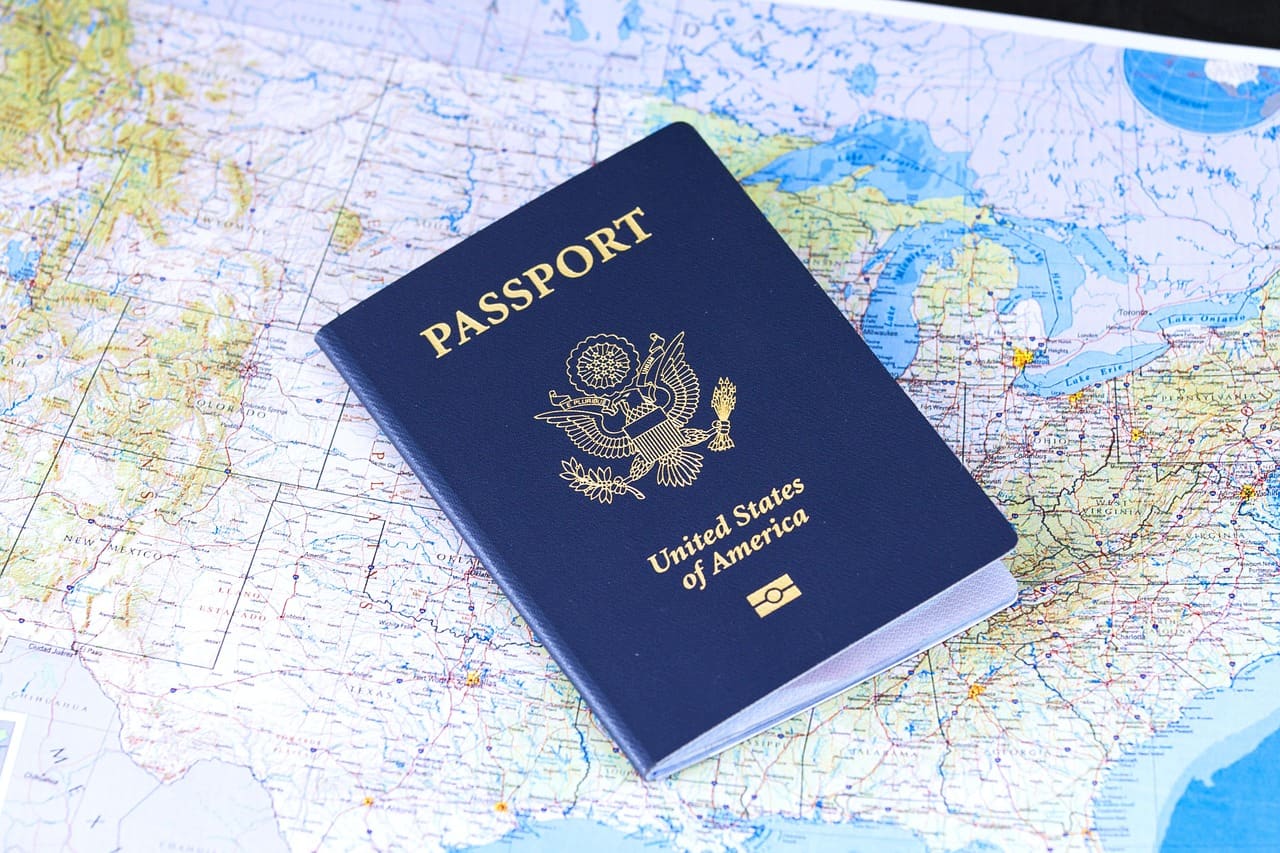
Applicable objects: Foreign tourists who plan to travel to China for tourism, business, family visits or short-term visits
China is continuing to expand its opening up to the outside world, and visa convenience for foreign tourists coming to China is also constantly improving.
As of November 2, 2026, foreign tourists can choose different visa-free entry methods according to their nationality, travel route and purpose of stay. Among them, the most noteworthy ones are:
- Unilateral visa exemption for 50 countries: Qualified ordinary passport holders can come to China without a visa and stay for no more than 30 days.
- 240-hour transit visa exemption for 57 countries: Eligible transit passengers can stay visa-free in designated areas of China for no more than 240 hours, that is, 10 days.
- 24-hour transit visa exemption: Qualified foreign tourists can transit and stay at all ports open to the outside world in China for no more than 24 hours. In principle, they are not allowed to leave the restricted area of the port.
- Hainan’s 30-day visa exemption: The scope of application and conditions are otherwise stipulated and cannot be confused with the national unilateral visa exemption policy.
It should be noted that these policies are not freely available to all foreign tourists. Nationality, passport type, purpose of entry, onward travel and port of entry all affect eligibility.
This article is compiled based on the official policies of the National Immigration Administration, the Ministry of Foreign Affairs of China, and embassies and consulates abroad as of November 2, 2026, to help foreign tourists determine whether they need to apply for a Chinese visa and how to arrange their entry itinerary.
01|China’s unilateral visa-free policy: 50 countries, maximum stay of 30 days
China implements a unilateral visa-free policy for holders of ordinary passports from some countries.
Eligible foreign tourists do not need to apply for a visa in advance from the Chinese embassy or consulate abroad. They can go directly to China with a valid ordinary passport and undergo border inspection upon entry.
Which countries can enjoy 30 days of unilateral visa exemption?
As of February 17, 2026, the list of unilateral visa-free countries announced by the National Immigration Administration totaled 50 countries.
Europe: 35 countries
France, Germany, Italy, Netherlands, Spain, Switzerland, Ireland, Hungary, Austria, Belgium, Luxembourg, Poland, Slovenia, Portugal, Greece, Cyprus, Slovakia, Norway, Finland, Denmark, Iceland, Andorra, Monaco, Liechtenstein, Bulgaria, Romania, Croatia, Montenegro, North Macedonia, Malta, Estonia, Latvia, Russia, Sweden, United Kingdom.
Asia: 7 countries
Brunei, South Korea, Japan, Saudi Arabia, Oman, Kuwait, Bahrain.
America: 6 countries
Canada, Brazil, Argentina, Chile, Peru, Uruguay.
Oceania: 2 countries
Australia, New Zealand.
The list of countries is based on the unilateral visa-free country list published by the National Immigration Administration on February 17, 2026. The list counts unilateral visa exemption policies and does not represent the total number of mutual visa exemption arrangements between China and other countries.
How many days can I stay without a visa?
Eligible travelers can stay in China for no more than 30 days.
The length of stay is calculated from 0:00 on the day after entry, and you can stay for 30 consecutive calendar days.
For example:
If a tourist enters China on November 2, the visa-free stay period starts from 0:00 on November 3, and the longest stay is until 24:00 on December 2.
What can I do with the visa-free policy to come to China?
Unilateral visa exemption applies to the following short-term activities:
- travel and tourism;
- business activities;
- visiting relatives and friends;
- exchange visits;
- transit.
In addition, this policy can also be applied to qualified foreigners who participate in sports events, exhibitions, and study activities (including summer camps and winter camps) within the prescribed stay period.
The following activities cannot be carried out solely based on this visa exemption policy:
- Employment or work in China that requires a work permit;
- Long-term study in China;
- Engage in news reporting that requires prior approval;
- Other activities that require prior permission according to law.
If the purpose of travel involves work, long-term study or news interviews, you should apply for the corresponding visa and required permissions in advance.
What conditions need to be met for unilateral visa exemption?
- Hold a valid ordinary passport issued by the applicable country.
- The purpose of coming to China is short-term activities allowed by the policy.
- The stay in China shall not exceed 30 days.
- Accept entry inspection by the Chinese border inspection agency.
Special note: The official requirement is to hold a valid ordinary passport. The validity period of the passport should meet the needs of traveling in China. There is no unified requirement that all unilateral visa-exemption passengers must hold a passport with a remaining validity period of more than 6 months.
In addition, persons holding non-ordinary passports such as travel certificates, temporary travel documents or emergency travel documents are not eligible for this unilateral visa exemption policy.
Does the unilateral visa exemption policy have an expiration date?
This is an issue that foreign tourists tend to overlook.
According to the official Q&A updated by the Chinese Embassy in Sweden on May 25, 2026:
- Brunei: There is currently no policy implementation deadline set.
- Russia: The policy will be implemented until December 31, 2027.
- The remaining 48 countries: The policy will be implemented until December 31, 2026.
Therefore, tourists who plan to come to China after the end of 2026, especially those from the above-mentioned 48 countries, should re-confirm whether the policy will be extended or adjusted before departure, and cannot default to the automatic extension of the current visa-free arrangement.
Official reference: "Unilateral Visa Exemption Policy Frequently Asked Questions (Updated on May 25, 2026)" of the Chinese Embassy in Sweden.
02|240-hour transit visa-free: 57 countries, stay in China for up to 10 days
If your passport does not belong to China’s unilateral list of visa-free countries, it does not necessarily mean that you need to apply for an ordinary visa.
Qualified foreign tourists can also enter China through the 240-hour transit visa-free policy.
This policy allows eligible travelers to stay in designated areas of China for up to 240 hours, or 10 days, on their way to a third country or region.
Different from ordinary unilateral visa exemption, the 240-hour transit visa exemption has one most important prerequisite:
Passengers must actually transit from one country or region to another country or region via China.
For example:
- Bangkok → Shanghai → Tokyo
- New York → Beijing → Seoul
- London → Chengdu → Singapore
- Sydney → Guangzhou → Hong Kong
The above are examples of itineraries that can reflect the transit relationship with a third place, but in the end, all conditions such as passenger nationality, port of entry, destination entry qualifications, and connecting tickets must still be met.
Which countries apply for 240-hour transit visa exemption?
On August 20, 2026, the National Immigration Administration of China issued Announcement No. 4 of 2026, adding Kyrgyzstan and Vietnam to the list of countries eligible for the 240-hour transit visa exemption.
There are currently 57 applicable countries.
Europe: 40 countries
Austria, Belgium, Czech Republic, Denmark, Estonia, Finland, France, Germany, Greece, Hungary, Iceland, Italy, Latvia, Lithuania, Luxembourg, Malta, Netherlands, Poland, Portugal, Slovakia, Slovenia, Spain, Sweden, Switzerland, Monaco, Russia, United Kingdom, Ireland, Cyprus, Bulgaria, Romania, Ukraine, Serbia, Croatia, Bosnia and Herzegovina, Montenegro, North Macedonia, Albania, Belarus, Norway.
America: 6 countries
United States, Canada, Brazil, Mexico, Argentina, Chile.
Oceania: 2 countries
Australia, New Zealand.
Asia: 9 countries
South Korea, Japan, Singapore, Brunei, United Arab Emirates, Qatar, Indonesia, Vietnam, Kyrgyzstan.
Source of the list: National Immigration Administration’s “Transit Visa Exemption Policy”, updated on August 20, 2026.
What conditions need to be met to apply for the 240-hour transit visa exemption?
There are mainly the following four items.
- Nationality meets the requirements
Applicants must hold an ordinary passport issued by one of the 57 countries mentioned above.
- Possess valid travel documents
Hold a valid ordinary passport, the document is valid for at least 3 months, and meet the entry conditions for the next destination.
It should be noted here that the passport validity requirements for 240-hour transit visa exemption are different from those for unilateral visa exemption, and the same standard cannot be simply applied.
- Holding a connecting ticket with confirmed date and itinerary
Passengers must hold a connecting ticket or relevant certificate to a third country (region) with a confirmed date and itinerary.
This means:
- There must be a clear time to leave China;
- There must be a clear next destination;
- You must be able to prove that you meet the entry requirements for your next destination;
- You cannot apply based on just a ticket for which the departure date has not yet been determined.
For example, a U.S. passport holder flying from New York to Shanghai, and then from Shanghai to Tokyo, and holding a qualifying onward ticket, can apply for this policy based on the actual itinerary.
But if it is just New York → Shanghai → New York, it usually does not meet the transit conditions to a third country (region).
- Enter through designated ports and move within permitted areas
The 240-hour transit visa exemption currently applies to 65 open ports in 24 provinces, autonomous regions, and municipalities in China.
Passengers must enter the country through ports designated by the policy and travel within the prescribed stay and activity areas.
Just because a city is located in a province covered by the policy, it does not mean that all airports, ports and border ports in the city can apply for 240-hour transit visa exemption.
Where can I go with the 240-hour transit visa exemption?
The current policy covers 24 provincial administrative regions:
Beijing, Tianjin, Hebei, Shanxi, Inner Mongolia, Liaoning, Jilin, Heilongjiang, Shanghai, Jiangsu, Zhejiang, Anhui, Fujian, Jiangxi, Shandong, Henan, Hubei, Hunan, Guangdong, Guangxi, Chongqing, Sichuan, Yunnan, Shaanxi.
There are two different concepts to note:
- Port of entry: Passengers are allowed to apply for a 240-hour transit visa exemption through this port.
- Stay activity area: The geographical area within which travelers can actually travel after being admitted.
The two are not exactly the same.
Some provinces allow activities throughout the province, while others only allow activities in designated cities or regions. Therefore, it cannot be simply understood that as long as you enter through any one of the 65 ports, you can travel freely in 24 provinces in China.
For example, the permitted scope of activities in Shanxi Province is Taiyuan and Datong; the permitted scope of activities in Guangxi is 12 cities including Nanning, Liuzhou, Guilin, Wuzhou, Beihai, Fangchenggang, Qinzhou, Guigang, Yulin, Hezhou, Hechi, and Laibin.
The scope of permitted activities in Fujian, Hubei, Shaanxi and other provinces has been expanded to the entire province.
Before departure, you should check the official map and list of "Ports and Stay Activity Areas Applicable to the 240-Hour Transit Visa-Free Policy" published by the National Immigration Administration.
When does the 240 hours start counting?
240 hours is not simply calculated from the specific moment the flight lands.
According to the calculation method of the transit visa-free policy, the visa-free stay time is calculated from 0:00 on the next day of entry.
Therefore, when actually arranging departure air tickets, the stay period approved by border inspection should be used as the criterion, and sufficient buffer time for traffic and flight delays should be reserved.
What can you do during the 240 hours?
Eligible travelers can engage in:
- travel and tourism;
- business activities;
- access;
- Visiting relatives.
However, activities that require prior approval such as work, study, news interviews, etc. must still apply for corresponding visas and permits in advance.
03|24-hour transit visa-free: short-term transit arrangement for global travelers
In addition to the 240-hour transit visa exemption, China also has a broader 24-hour transit visa exemption policy.
Different from the 240-hour policy, the 24-hour transit visa exemption is open to people from all over the world and does not require applicants to be from a specific 57 countries.
The main conditions include:
- Hold your valid international travel documents.
- Holders of connecting tickets to a third country or region with confirmed seats.
- The stay in China shall not exceed 24 hours.
- Do not leave the port restricted area.
For example, if a foreign passenger flies from Seoul to Shanghai and then transfers from Shanghai to Paris, if the transit time in Shanghai does not exceed 24 hours and does not leave the restricted area specified by the airport, the 24-hour transit visa exemption policy can be applied.
If you want to leave the airport and enter the city for sightseeing, you need to apply for a temporary entry permit from the port entry-exit border inspection agency. The 24-hour transit visa exemption cannot be directly understood as free entry into the city.
This policy is suitable for short-term layovers on international flights, but is not suitable for passengers who want to stay in China for a few days and arrange city sightseeing.
04|Hainan’s 30-day visa exemption: and the national unilateral visa exemption are two different policies
Hainan also implements an independent visa-free policy for foreigners entering the country.
As of August 20, 2026, the number of countries applicable to Hainan's 30-day visa-free policy has increased to 61.
This policy is different from the unilateral visa exemption for 50 countries and the 240-hour transit visa exemption for 57 countries.
Starting from August 20, 2026, citizens of Kyrgyzstan and Vietnam can also apply for Hainan’s 30-day visa-free policy.
Qualified passengers can enter the country through Hainan Province’s open ports with ordinary passports and stay visa-free within the administrative area of Hainan Province for no more than 30 days.
During the stay, you can engage in short-term activities such as tourism, business, visits, and family visits; activities that require prior approval such as work, study, and news interviews should still apply for corresponding visas in advance.
Need to pay attention to:
- Hainan’s 30-day visa exemption is not equivalent to the nationwide 30-day visa exemption.
- The Hainan policy has an independent list of applicable countries and entry requirements.
- Just because you can enter Hainan without a visa, it does not automatically mean that you can travel from Hainan to other provinces in China without a visa.
- If you plan to travel between Hainan and Beijing, Shanghai, Chengdu and other mainland cities, you should check in advance whether there are other applicable entry policies.
For foreign tourists planning Hainan vacations, island trips and short-term business visits, this is a convenient policy worthy of separate attention.
05|What is the difference between unilateral visa exemption and 240-hour transit visa exemption?
The two policies are easily confused, but the actual applicable conditions are very different.
| Compare items | Unilateral visa exemption | 240-hour transit visa-free |
|---|---|---|
| Applicable countries | 50 countries | 57 countries |
| Passport requirements | Valid ordinary passport | Valid ordinary passport |
| Duration of stay | Up to 30 days | Up to 240 hours |
| Do you need a trip to a third country? | unnecessary | Must meet transit conditions |
| Do you need an onward flight ticket? | Non-uniform mandatory conditions, it is recommended to prepare itinerary materials | Must have a connecting ticket or relevant certificate with confirmed date and itinerary |
| port of entry | Sea, land and air ports open to foreigners | 65 designated ports |
| Scope of activities | According to normal entry management regulations | Limited to approved areas |
| Can I travel? | Can | Can |
| Is it possible to visit for business? | Can | Can |
| Can I work? | Can't | Can't |
| Can I study for a long time? | Can't | Can't |
Practical selection suggestions:
- If you hold an ordinary passport listed in the unilateral signature exemption list of 50 countries and travel to China for no more than 30 days, you will have priority to check the unilateral visa exemption conditions.
- If you are not on the list of 50 countries, but are eligible for the 240-hour transit visa exemption among the 57 countries, and you do have a trip to a third country (region), you can consider the 240-hour transit visa exemption.
- If you are only in China for a short layover and do not plan to leave the airport, you can learn more about the 24-hour transit visa exemption.
- If you plan to stay in China for longer than the corresponding period, or if your travel purpose does not meet the visa exemption conditions, you should apply for the corresponding visa in advance.
06|What materials do foreign tourists need to prepare in advance when entering China?
Even if you meet the conditions for visa exemption, it does not mean that you will be able to enter China unconditionally after arriving in China.
All foreign passengers are subject to inspection by China's border inspection agencies. The border inspection agency has the right to verify the passenger's identity, entry purpose, itinerary and compliance with relevant policies based on the actual situation.
It is recommended to prepare the following materials before departure.
1. Valid passport
Make sure to hold an ordinary passport that meets the requirements of the corresponding visa exemption policy.
Special attention:
- Unilateral visa exemption: The validity period of the passport should meet the needs of traveling in China.
- 240-hour transit visa-free: Passport valid for at least 3 months.
- 24-hour transit visa-free: valid international travel documents are required.
If your passport is about to expire, it is recommended to replace it in advance. Do not judge whether you meet the entry requirements for China based solely on the airline's boarding requirements.
2. Round trip air ticket or onward air ticket
Prepare the corresponding air tickets according to the entry policy:
- Unilateral visa exemption: It is recommended to prepare return tickets or subsequent travel arrangements.
- 240-hour transit visa exemption: You must have a connecting ticket or related certificate to a third country (region) with a confirmed date and itinerary.
- 24-hour transit visa exemption: you need to hold a connecting ticket with a confirmed seat.
For the 240-hour transit visa exemption, it is recommended to confirm in advance whether the departure point, transit point and final destination on the ticket meet the transit requirements of a third country (region).
3. Hotel reservation and accommodation address
It is recommended to prepare in advance:
- Hotel booking confirmation;
- Check-in and check-out dates;
- Full hotel address;
- Contact number;
- Travel arrangements within China.
These materials can help travelers explain their travel purposes and accommodation plans.
It should be noted that hotel orders are not the legal entry documents that all visa-exempt passengers must submit, but the border inspection agency can verify relevant certificates based on the actual situation.
4. Travel plans and invitation materials
If the purpose of coming to China is tourism, it is recommended to prepare a simple itinerary.
If the purpose of coming to China is a business visit, family visit or exchange activities, you can prepare according to the actual situation:
- business invitation letter;
- Access unit information;
- Proof of family visit relationship;
- event invitations;
- Other materials that can explain the purpose of entry.
These materials do not mean that every visitor must submit them in advance, but it is recommended that they be provided when needed.
5. Registration for entry and accommodation
Foreigners staying in China must register their accommodation in accordance with regulations.
According to Article 39 of the Exit and Entry Administration Law of the People's Republic of China:
- Accommodation in a hotel: The hotel shall handle accommodation registration in accordance with regulations and submit relevant information to the public security organs.
- When staying at a residence other than a hotel: The person or the person staying overnight must register with the public security bureau at the place of residence within 24 hours after check-in.
Online processing will be promoted nationwide from September 21, 2026
This is the latest convenience measure that deserves special attention from foreign tourists.
Starting from September 21, 2026, the National Immigration Administration will promote online registration services for foreigners’ accommodation other than hotels across the country.
This can be done through the following channels:
- National Immigration Administration government service website;
- Immigration Bureau 12367 App;
- WeChat mini program "Immigration Bureau 12367";
- Alipay mini program "Immigration Bureau 12367".
Online registration has the same effect as on-site processing at the public security organ, and offline processing channels will still be retained.
If you are staying at a friend's house, a private residence, or other non-hotel accommodation, you should confirm registration arrangements with the guest in advance. If the online application is unsuccessful, you should go to the public security organ for on-site application in accordance with regulations.
07|The Frequently Asked Questions about China Visa Waiver that foreign tourists are most concerned about
Q1: Can I fly to China from other countries if I hold a passport from a visa-free country?
Can.
The unilateral visa exemption policy does not require travelers to depart from the country of passport issuance or nationality.
For example, even if a French citizen is currently in the United States, Singapore or Thailand, he can fly directly from there to China as long as he meets the unilateral visa exemption conditions.
However, the 240-hour transit visa exemption is different. It must meet the transit itinerary requirements from one country or region to another country or region via China.
Q2: Can I enter China multiple times if I hold a unilateral visa-free passport?
Can.
According to the official Q&A updated in 2026 by Chinese embassies and consulates abroad, foreigners who meet the conditions for unilateral visa exemption can enter the country multiple times using this policy.
At present, the policy does not uniformly stipulate the maximum number of visa-free entries and total days of stay.
However, each entry must still meet the visa exemption conditions, and frequent entries cannot be used to engage in activities that are inconsistent with the purpose of entry.
Q3: Can the unilateral visa exemption be extended?
Two situations need to be distinguished.
Under normal circumstances, the visa-free stay period is 30 days. The visa-free stay cannot be understood as being free to apply for an extension of travel time.
If you really need to continue to stay after entering the country due to reasonable and justifiable reasons, you can apply for a stay permit from the local public security bureau’s entry-exit management agency, which will be reviewed by the competent authority in accordance with the law.
If you have determined that you need to stay in China for more than 30 days before departure, it is recommended to apply for a visa in advance that is consistent with the actual purpose of travel.
Q4: Can I return to my original country of departure from China with the 240-hour transit visa exemption?
Need to meet the conditions for traveling to a third country (region).
For example:
- United States → Shanghai → Japan: It conforms to the basic structure of the third place itinerary.
- United Kingdom → Beijing → Singapore: In line with the basic structure of the third place itinerary.
- Canada → Guangzhou → Australia: conforms to the basic structure of the third place itinerary.
- United States → Shanghai → United States: Usually does not meet the transit conditions of third countries (regions).
In the end, the passenger’s nationality, connecting ticket, port and destination entry qualifications must be checked. Whether it complies with the policy cannot be judged based on the route name alone.
Q5: Are Hong Kong and Macao considered third countries (regions)?
Hong Kong and Macau are special administrative regions of China and are the third regions that can be covered by the 240-hour transit visa-free policy.
For example, eligible foreign travelers can plan to:
London → Shanghai → Hong Kong.
However, it should be noted that whether the transit conditions are met must be determined based on the complete departure place, itinerary to enter mainland China, and departure destination.
If it is Hong Kong → Shanghai → Hong Kong, just because Hong Kong and the Mainland implement different entry and exit management systems, it does not automatically meet the third place transit requirements.
For special itineraries between Hong Kong, Macau and mainland China, it is recommended to consult the National Immigration Administration 12367 in advance and confirm with the operating airline.
Q6: Can US, Canadian, and British passport holders come to China without a visa?
Two different policies can be considered:
- Unilateral visa exemption: The United Kingdom and Canada belong to the list of 50 countries, and eligible ordinary passport holders can stay visa-free for no more than 30 days; the United States is not on this list.
- 240-hour transit visa exemption: The United States, Canada, and the United Kingdom are all on the applicable list of 57 countries, but they must meet the transit conditions of a third country (region).
For example, if an American tourist plans to fly from New York to Shanghai, travel in China for 12 days, and then return directly to New York, he cannot use the 240-hour transit visa exemption with his American passport alone.
However, if you are traveling from New York to Tokyo, passing through Shanghai and staying for no more than 240 hours, you can further check whether you meet the transit visa exemption requirements.
Q7: Do tourists from Japan, South Korea and Singapore need a visa to come to China?
Qualified ordinary passport holders can enjoy China's unilateral visa-free policy and can travel to China for a maximum stay of 30 days.
In addition, these three countries are also eligible for 240-hour transit visa exemption.
If both policies are met, the unilateral visa-free policy with simpler conditions and longer stay period is usually preferred instead of deliberately arranging transit in a third country.
Q8: Can minors use the visa-free policy?
Can.
According to the visa-free policy Q&A published by Chinese embassies and consulates abroad, the conditions for minors to apply for the visa-free policy are the same as those for adults.
However, minors need to hold their own valid ordinary passport.
It is recommended for family travelers to prepare additional items:
- Birth certificate or other proof of kinship;
- Passport information of parents and children;
- If a minor is accompanied by only one parent or other adult, corresponding guardian authorization documents can be prepared to respond to the verification requirements of the airline or relevant agencies.
What needs to be distinguished is that the following family travel materials are travel preparation suggestions and are not additional materials required by China's unilateral visa exemption policy for all minors.
Q9: Can I also use the visa-free policy when joining a Chinese tour group?
Can.
Foreign tourists who meet the conditions of the visa exemption policy can apply for the corresponding visa exemption policy, whether they are traveling individually, traveling as a family, or participating in a tour group organized by a travel agency.
In other words, foreign tourists do not need to apply for an additional tourist visa to participate in a tour group within China.
However, travel agencies should still verify the nationality, passport type, length of stay and mode of entry of each group member when designing itineraries.
Q10: After visa-free entry, can I go to any city in China?
This needs to be judged based on the policy used.
Unilateral visa exemption:
After meeting the policy conditions and being allowed to enter, you can travel within China in accordance with normal entry management regulations and are not restricted by the 240-hour transit visa-free specific activity area.
240-hour transit visa exemption:
You can only travel within the stay activity area approved by the policy, and cannot travel to unopened provinces or cities.
Hainan 30-day visa exemption:
According to this policy, when traveling within the administrative area of Hainan Province, Hainan’s visa exemption cannot be directly understood as a nationwide visa exemption.
Q11: How can I come to China if I don’t meet any visa-free policy?
If you do not meet the unilateral visa exemption, 240-hour transit visa exemption or other special visa exemption policies, you usually need to apply for the corresponding Chinese visa in advance.
Common types include:
- L visa: tourism;
- M visa: commercial and trade activities;
- Q visa: family reunion, visiting relatives;
- S visa: personal matters;
- Z visa: work;
- X1, X2 visa: study.
Different visa types correspond to different application conditions, materials and stay arrangements, and should be selected based on the actual purpose of coming to China.
08|How do foreign tourists determine which visa-free policy they should use?
If you are not sure whether your passport can come to China without a visa, you can check according to the following judgment sequence.
Quick judgment on China’s visa-free entry policy
Step 1: Does your ordinary passport belong to the unilateral signature-free list of 50 countries?
If it is, and the purpose of travel meets the requirements and the stay does not exceed 30 days:
Priority for 30-day unilateral visa exemption
Step 2: If it does not belong to the 50-country list, does it belong to the 57-country transit signature-free list?
If it is, and there is indeed a confirmed itinerary to a third country (region):
Check for 240-hour transit visa exemption
Step 3: Is it just a short-term international transfer?
If the stay does not exceed 24 hours and does not leave the port restricted area:
Check for 24-hour transit visa exemption
Step 4: Do you plan to travel only in Hainan?
Check Hainan’s independent 30-day visa-free policy and the applicable list of 61 countries.
If none of the above conditions are met
You should apply for the corresponding Chinese visa in advance according to the purpose of travel.
For tourists who plan to travel across cities or provinces, they especially need to check the 240-hour transit visa-free activity areas in advance. They cannot wait until they arrive in China to discover that the original route does not comply with the policy.
09|Final verification before departure: three official channels
China’s visa-free policy may continue to be adjusted. Especially at the end of 2026, some unilateral visa-free policies have a clear implementation period.
It is recommended that foreign tourists check the policy before purchasing non-refundable tickets and again before departure.
The following three official channels are most worth collecting.
- National Immigration Administration
List of visa-free countries, transit visa-free, ports and stay areas
Visit the National Immigration Administration
- Ministry of Foreign Affairs of China
Visa policies, notices and latest announcements from embassies and consulates abroad
Visit to the Chinese Ministry of Foreign Affairs
- National Immigration Administration 12367 Service Platform
Specific entry qualifications, accommodation registration and policy consultation
Visit the immigration management government service platform
If you have any questions about whether your specific itinerary meets the visa-free conditions, you can call 12367 for consultation; when calling from abroad, you can use +86 12367.
10|Planning to travel to China? Confirm entry qualifications in advance and arrange travel routes appropriately
China is a vast country, and different regions have completely different natural landscapes, history, culture, and urban life.
For foreign tourists who come to China for the first time, they can choose different travel areas according to their travel time and interests.
Shanghai, Hangzhou, Suzhou: Jiangnan City and Cultural Travel
Suitable for first time visitors to China, city sightseeing, historical architecture, traditional gardens and food experiences. Shanghai can be used as an international entry hub to connect Hangzhou and Suzhou.
Beijing, Xi’an: History, Culture and Ancient Capital Exploration
Suitable for tourists who are interested in Chinese history, ancient architecture, and world cultural heritage. Representative experiences such as the Forbidden City, the Great Wall, and the Terracotta Warriors can be arranged.
Guilin, Yangshuo: landscapes and natural scenery
Suitable for tourists who want to experience China's natural landscape, Li River landscape, rural life and outdoor activities.
Chengdu, Chongqing: Food, Pandas and Southwest Style
Suitable for food lovers, nature experience tourists and travelers who want to understand the urban culture of southwest China.
Hainan: Island Vacation and Tropical Relaxation
Suitable for seaside vacations, family travel, hot spring relaxation and tropical nature experiences. Qualified tourists can also learn about Hainan’s 30-day independent visa-free policy.
For tourists coming to China for the first time, it is recommended not only to focus on whether the visa is exempted, but also to understand practical issues such as transportation methods between cities, domestic flight and high-speed rail reservations, hotel accommodation registration, mobile payment, and language communication in advance.
These preparations directly impact the travel experience.