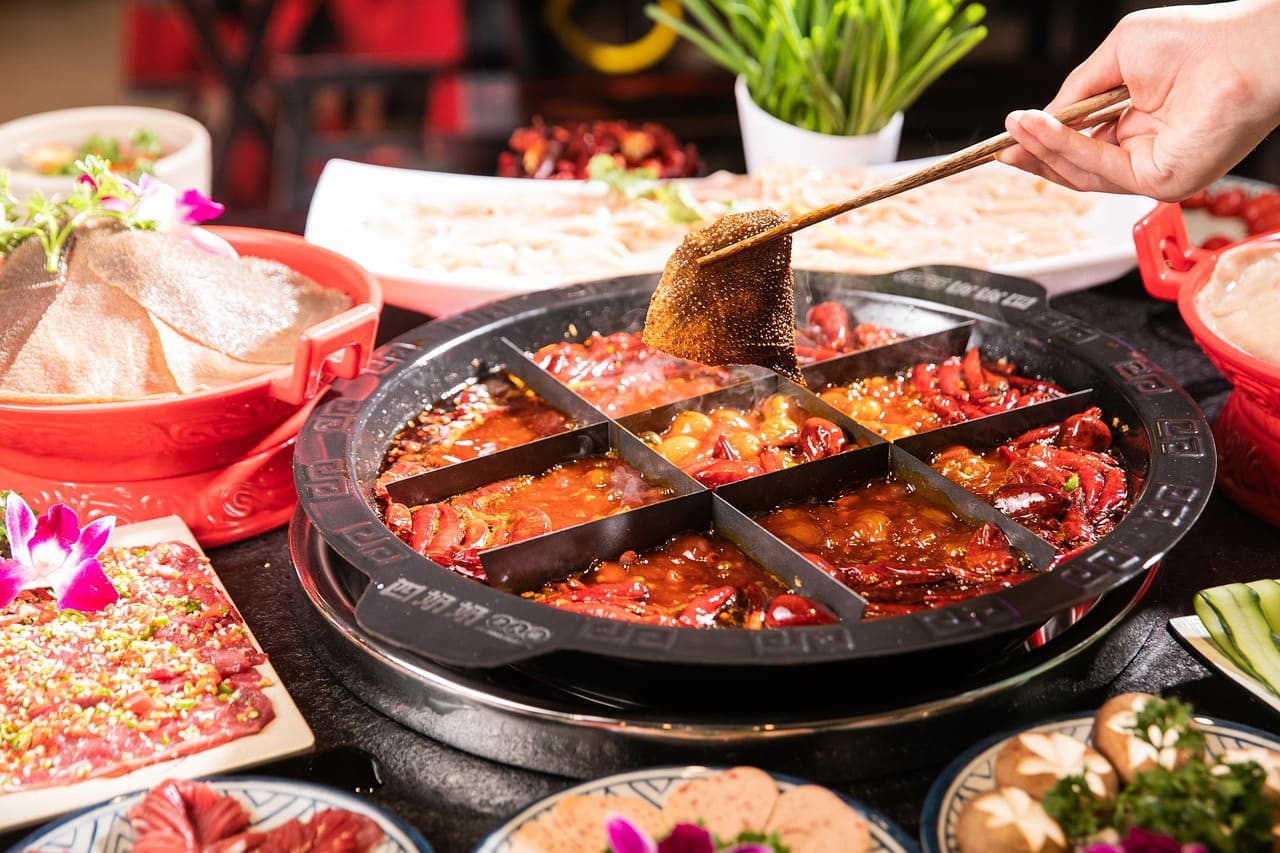
01|What should foreign tourists know first when ordering food at a Chinese restaurant?
There are a wide variety of dining options in China, from street food and local restaurants to chain restaurants in shopping malls, and there are obvious differences in how you order.
Some restaurants provide paper menus, some use desktop QR codes for ordering, and some mainly rely on mobile apps or mini-programs. Large restaurants in popular tourist cities may offer English menus, but in local cities, community restaurants and snack bars, it is also common for menus to be in Chinese only.
For foreign tourists, the real difficulty is usually not how to say "I want this", but the following questions:
- Can’t understand the Chinese menu and aren’t sure what a dish is;
- Not knowing whether the dish contains chili peppers, peanuts, seafood or other ingredients;
- Have special dietary requirements such as food allergies, vegetarian, halal or gluten-free;
- Unsure whether a dish uses broth, lard, oyster sauce or other hidden ingredients;
- When using a mobile phone to scan a QR code to order food, I don’t know how to explain my request to the waiter.
When ordering food in China, the most practical principles are:
Confirm the dishes and main ingredients first, then explain your dietary restrictions, and finally ask the restaurant to confirm the actual preparation method.
If it's just a general taste preference, such as not eating spicy food or using less salt, it's usually easier to communicate. But when it comes to severe food allergies, vegan, halal or other religious dietary requirements, you can't just rely on menu translations or pictures of dishes.
02|What are the ordering methods in Chinese restaurants?
The ordering process may vary from restaurant to restaurant. Learn about some common ways you can reduce communication barriers.
1. Paper menu
Traditional restaurants usually provide paper menus, and some restaurants for tourists also prepare bilingual menus in Chinese and English.
If the menu is only in Chinese, you can ask the waiter directly:
| Chinese expression | Pinyin | English |
|---|---|---|
| Menu, please. | Qǐng gěi wǒ yí fèn càidān. | Could I have a menu, please? |
| Is there an English menu? | Yǒu Yīngwén càidān ma? | Do you have an English menu? |
| What is this dish? | Zhè dào cài shì shénme? | What is this dish? |
| What are the main ingredients in this dish? | Zhè dào cài yǒu shénme zhǔyào shícái? | What are the main ingredients? |
| Can you introduce it to me? | Kěyǐ gěi wǒ jièshào yíxià ma? | Could you explain this dish? |
If the waiter cannot introduce the dishes in English, he can point directly to a dish on the menu and use translation software to assist communication.
2. Scan the QR code to order food
Desktop QR code ordering has become very common in Chinese urban restaurants.
The usual process is as follows:
- Scan the QR code on the table;
- Open the restaurant webpage, WeChat applet or other ordering page;
- Browse the menu;
- Select dishes, portion sizes and quantities;
- Submit order;
- Complete payment according to restaurant procedures or wait for confirmation from the waiter.
Need to pay attention to:
- Some scan code ordering pages are only in Chinese;
- Some pages require the use of WeChat or other platform accounts;
- Some restaurants allow you to order first and pay later, while others require payment first;
- The dish notes feature doesn’t necessarily allow the kitchen to accurately understand complex allergies or dietary requirements.
If you have severe food allergies or need to strictly control certain ingredients, it is not recommended to just write a sentence in English in the order remarks column. This should be stated directly to the waiter before submitting the order, and confirmed that the kitchen can understand and execute it.
3. Order at the counter
Fast food restaurants, noodle restaurants, steamed bun shops, milk tea shops and some local snack bars usually use counter ordering.
You can point directly to the menu or show a picture of your phone and say:
- I want this.
Wǒ yào zhège. I'll have this one.
- I'll take two copies of this.
Wǒ yào liǎng fèn zhège. I'll have two portions of this.
- Not spicy.
Bú yào là. No chili, please.
- Can it be packed?
Kěyǐ dǎbāo ma? Can I get this to go?
If you are not sure about the contents of the dish, it is recommended to ask first before paying.
4. Buffet and hot pot
The ordering methods for buffets and hot pots are different.
Buffets often allow you to view the food directly, but dish labels may not fully describe all ingredients. For guests at risk of allergies, especially sauces, soup bases, desserts and shared tongs need to be confirmed.
Hot pot requires special attention to the soup base and dipping ingredients:
- Spicy soup bases may contain a variety of spices, chilies, and other ingredients;
- The broth does not have to be vegan, chicken broth or bone broth may be used;
- Dips may contain peanuts, sesame seeds, oyster sauce, shrimp paste, or other ingredients;
- Different ingredients may share pots, tongs or work surfaces.
If you have strict dietary restrictions, mention them before choosing a restaurant and soup base. Don't wait until the food is served before making a request.
03|I can’t understand the Chinese menu, how can I quickly translate the dishes?
Chinese dish names sometimes do not directly describe the main ingredients.
For example:
- Fish-flavored shredded pork: Usually pork shreds are used as the main ingredient. Fish-flavored pork is a seasoning style that does not necessarily contain fish;
- Kung Pao Chicken: usually made from chicken, peanuts, peppers, etc.;
- Mapo Tofu: The traditional method usually contains minced meat and cannot be directly regarded as a vegetarian food;
- Oyster lettuce: usually contains oyster sauce and is not suitable for vegans;
- Egg Fried Rice: Contains eggs;
- Braised Pork: Usually pork is the main ingredient.
Therefore, one cannot rely solely on the literal translation of the dish name.
1. Use your phone’s camera to translate menus
If the menu is only in Chinese, you can use the camera translation or picture text recognition function on your phone.
Basic operations:
- Open a translation tool that supports image translation;
- Point the camera at the menu;
- Let the text completely enter the recognition area;
- View translation results;
- For dishes you are unsure about, ask the waiter for the main ingredients.
This method is suitable for quickly understanding the menu, but it is not suitable for directly determining allergens.
For example, a machine might translate a dish containing lard, chicken stock or oyster sauce as "Vegetable Dish," but that doesn't mean it qualifies as vegetarian.
2. First look at the keywords in the dish name
Here are the ingredients and cooking methods commonly found on Chinese restaurant menus.
Common ingredients
| Chinese | English | illustrate |
|---|---|---|
| pork | Pork | pork |
| beef | Beef | beef |
| mutton | Lamb/Mutton | mutton |
| chicken | Chicken | chicken |
| duck | Duck | duck |
| fish | Fish | fish |
| shrimp | Shrimp / Prawn | shrimp |
| Crab | Crab | Crab |
| shellfish | Shellfish | shellfish |
| egg | Egg | egg |
| milk | Milk | milk |
| peanut | Peanut | peanut |
| Sesame | Sesame | Sesame |
| Tofu | Tofu | Soy products |
| mushroom | Mushroom | mushroom |
| coriander | Coriander / Cilantro | coriander |
| onion | Spring Onion | onion |
| garlic | Garlic | garlic |
Common cooking methods
| Chinese | English | illustrate |
|---|---|---|
| steamed | Steamed | Steaming, usually retaining the original flavor of the ingredients |
| Boiled | Sichuan-style poached in chili oil | Boiled food in Sichuan cuisine usually comes with spicy oil |
| Braised in soy sauce | Braised in soy sauce | Teriyaki, usually using soy sauce and seasonings |
| saute | Stir-fried | stir-fry |
| stir-fry | Quickly stir-fried | Quickly fry over high heat |
| fried | Deep-fried | fried |
| Cold salad | Cold tossed/Mixed | Cold salad |
| bake | Grilled/Roasted | grilled |
| stew | Stewed | stew |
| pot | Slow-cooked in a pot | Claypot |
| dry pot | Dry pot | Dry pot, usually with heavier seasonings |
| Spicy | Numbing and spicy | Spicy |
| Hot and sour | Sour and spicy | Hot and sour |
| light | Lightly seasoned | Taste lighter |
Special reminder: The cooking method cannot directly represent the composition of the ingredients. For example, "steamed" doesn't mean there's no soy sauce, "clear soup" doesn't mean there's no meat stock, and "cold" doesn't mean there's no peanut oil or sesame sauce.
3. These dish names are particularly prone to misunderstandings
Fish-fragrant
Fish flavor is a common seasoning style in Sichuan cuisine, which does not mean that the dish must contain fish.
But fish-flavored shredded pork usually contains pork, and the seasoning may vary from restaurant to restaurant. Vegans or those allergic to specific ingredients should inquire further.
Kung Pao
Kung Pao Chicken usually contains chicken, peanuts and chili peppers.
Visitors with peanut allergies should pay special attention to this type of dish.
Mapo
Traditional Mapo Tofu usually uses minced meat, and common methods also use seasonings such as chili and bean paste.
If a vegetarian diet is desired, ask explicitly if mince meat, broth and animal fats can be omitted entirely.
Oyster Sauce
Oyster sauce is usually made from oysters and is an animal-based seafood seasoning.
Even if the dish itself only consists of green vegetables, it may not be suitable for vegans or people with shellfish allergies due to the addition of oyster sauce.
Stock/Broth
Stock may be made from chicken, pork bones, beef bones, fish or other ingredients.
If you don't eat meat, don't just ask if the dish has cuts of meat, but also if it uses broth.
Dry Pot
Dry pot usually uses more fat and complex seasonings, and some dishes also add meat, chili, peanuts or animal oil.
Don’t judge whether a dish meets dietary requirements just by the vegetables or soy products in its name.
04|Don’t speak Chinese? These ordering sentences can be used directly
No need to master complex Chinese. Remember the following sentence patterns and you can basically handle most ordinary restaurant scenes.
Basic ordering
| Chinese | Pinyin | English |
|---|---|---|
| I want this. | Wǒ yào zhège. | I'll have this one. |
| I want one. | Wǒ yào yí fèn. | One portion, please. |
| I want two copies. | Wǒ yào liǎng fèn. | Two portions, please. |
| What ingredients does this have? | Zhège yǒu shénme pèiliào? | What ingredients does this contain? |
| How many people is this suitable for? | Zhège shìhé jǐ ge rén chī? | How many people does this serve? |
| Do you have any recommended dishes? | Yǒu tuījiàn de cài ma? | Do you have any recommendations? |
| Can this be done without chili pepper? | Zhège kěyǐ bú fàng làjiāo ma? | Can this be made without chili? |
| Can I add less salt? | Kěyǐ shǎo fàng yán ma? | Can you use less salt? |
| Can I put less oil? | Kěyǐ shǎo fàng yóu ma? | Can you use less oil? |
Spiciness and taste
| Chinese | Pinyin | English |
|---|---|---|
| I don't eat spicy food. | Wǒ bù chī là. | I don't eat spicy food. |
| No chili pepper at all. | Yìdiǎn làjiāo dōu bú yào. | No chili at all, please. |
| Mildly spicy is ok. | Wēi là kěyǐ. | Mildly spicy is fine. |
| No peppercorns. | Bú yào huājiāo. | No Sichuan peppercorns, please. |
| No cilantro. | Bú yào xiāngcài. | No coriander, please. |
| No onions and garlic. | Bú yào cōng hé suàn. | No spring onion or garlic, please. |
| Use less sugar. | Shǎo fàng táng. | Less sugar, please. |
| Don't let the wine go. | Bú yào fàng jiǔ. | No alcohol, please. |
Note: "No chili" does not necessarily mean that the dish is not spicy at all. Some dishes use chili oil, chili sauce, chili powder or other complex seasonings. If you can't eat anything spicy, state that clearly and ask the kitchen if you can avoid the flavoring altogether.
Other practical expressions
| Chinese | Pinyin | English |
|---|---|---|
| Can the dishes be served separately? | Kěyǐ fēnkāi shàng cài ma? | Can the dishes be served separately? |
| Can it be packed? | Kěyǐ dǎbāo ma? | Can I take this away? |
| Please give me a pair of chopsticks. | Qǐng gěi wǒ yì shuāng kuàizi. | A pair of chopsticks, please. |
| Please give me a fork. | Qǐng gěi wǒ yí ge chāzi. | A fork, please. |
| Please give me a glass of warm water. | Qǐng gěi wǒ yì bēi wēnshuǐ. | A glass of warm water, please. |
| Where can I check out? | Qǐngwèn zài nǎlǐ jézhàng? | Where can I pay? |
| Pay the bill. | Mǎidān. | The bill, please. |
05|What should I do if I have food allergies in China? These ingredients require special attention
If you have a food allergy, you need to be more cautious when traveling in China than the average tourist.
Chinese cuisine often uses complex seasonings, cooking oil, sauces and stocks. Some ingredients don't appear directly in the dish's name, but may still be present in the preparation.
For example:
- A vegetable dish might use peanut or sesame oil;
- A bowl of noodles might use soy sauce or other complex seasonings that contain wheat;
- A dish that appears to be devoid of seafood may include shrimp paste, dried shrimp, or oyster sauce;
- A serving of fried rice might use eggs, lard, or other animal ingredients;
- A soup might use chicken broth, bone broth, or fish broth.
1. Allergen labeling of prepackaged foods in China
China has released a new version of the "National Food Safety Standard - General Principles for Prepackaged Food Labeling" (GB 7718-2025).
The standard stipulates that eight categories of allergenic substances used directly as ingredients in prepackaged foods need to be prompted in prescribed ways:
- Gluten-containing grains and their products, such as wheat, rye, barley, and oats;
- Crustaceans and their products, such as shrimp, crab and lobster;
- Fish and its products;
- Eggs and their products;
- Peanuts and their products;
- Soybeans and their products;
- Milk and milk products, including lactose;
- Nuts and nut products.
Other substances that may cause allergies, such as sesame and its products, coconut and its products, can also be reminded voluntarily according to regulations.
There are two times and scopes of application that need to be noted:
- GB 7718-2025 is scheduled to be implemented on March 16, 2027.
- This standard applies to prepackaged food labels and does not apply to catering foods and ready-to-sell foods.
Therefore, just because there are allergen labels on prepackaged food labels, it does not mean that all restaurants in China must list the eight major categories of allergens on their menus.
If you buy packaged snacks, drinks or other pre-packaged foods, you can check the Chinese ingredient list and related tips; if you order freshly prepared dishes at a restaurant, you need to confirm the ingredients and preparation methods directly with the restaurant.
2. Common hidden ingredients
The following Chinese vocabulary is recommended for tourists with food allergies or strict dietary restrictions to memorize in advance.
| Chinese | English | need attention |
|---|---|---|
| peanut oil | Peanut Oil | Risks associated with peanuts |
| peanut butter | Peanut Butter | peanut |
| tahini | Sesame Paste | Sesame |
| sesame oil | Sesame Oil | Sesame |
| Oyster sauce | Oyster Sauce | Oysters, shellfish |
| shrimp paste | Shrimp Paste | Shrimp |
| shrimp | Dried Shrimp | Shrimp |
| fish sauce | Fish Sauce | fish |
| soy sauce | Soy Sauce | Soybeans, some products contain wheat |
| flour | Wheat Flour | wheat, gluten |
| egg liquid | Egg | egg |
| cream | Cream | dairy products |
| condensed milk | Condensed Milk | dairy products |
| lard | Lard | Animal oil derived from pork |
| chicken soup | Chicken Stock | chicken |
| bone broth | Bone Broth | May contain pork or beef bones |
| stock | Stock | May contain a variety of animal-based ingredients |
This form is suitable for identifying risks, but it is not a substitute for restaurant confirmation. Especially for compound sauces, pre-made sauces and shared kitchen equipment, the actual ingredients may vary from brand to brand and restaurant to restaurant.
3. How to explain food allergies in Chinese?
The most basic sentence structure is:
I am allergic to...
Pinyin: Wǒ duì …… guòmǐn.
English: I am allergic to…
For example:
- I am allergic to peanuts.
Wǒ duì huāshēng guòmǐn. I am allergic to peanuts.
- I'm allergic to shrimp.
Wǒ duì xiā guòmǐn. I am allergic to shrimp.
- I'm allergic to eggs.
Wǒ duì jīdàn guòmǐn. I am allergic to eggs.
- I'm allergic to milk.
Wǒ duì niúnǎi guòmǐn. I am allergic to milk.
- I'm allergic to wheat.
Wǒ duì xiǎomài guòmǐn. I am allergic to wheat.
- I am allergic to nuts.
Wǒ duì jiānguǒ guòmǐn. I am allergic to nuts.
If the allergy is more severe, it is recommended to use more clear expressions:
I am severely allergic to peanuts and even small amounts can cause severe reactions. Please make sure that neither the dish nor the seasonings used are peanut-free.
Wǒ duì huāshēng yánzhòng guòmǐn, jíshǐ shǎoliàng yě kěnéng yǐnqǐ yánzhòng fǎnyìng. bù hán huāshēng.
I have a severe peanut allergy. Even a small amount may cause a serious reaction. Please confirm that this dish and its seasonings contain no peanuts.
You can also add:
- Please do not use sauces containing this ingredient.
Please do not use sauces containing this ingredient.
- Are cooking pots and utensils shared with other foods?
Are the pans and utensils shared with other foods?
- Can the kitchen avoid cross-contact?
Can the kitchen prevent cross-contact?
4. What is cross-contact? Why do we need special attention?
Cross-contact refers to food that does not originally contain a certain allergen and becomes contaminated due to contact with related ingredients, utensils or operating surfaces during storage, preparation or cooking.
For example:
- Use the same knife to process peanuts first and then vegetables;
- Making another dish without cleaning the wok;
- Fryers use the same frying pan to cook different foods;
- Use the same cutting board for seafood and other ingredients;
- The same pair of tongs are used again and again from dish to dish.
If you only slightly dislike an ingredient, just ask that it not be added.
But if you have severe food allergies, you must check whether the restaurant can control cross-contact. Removing certain ingredients from a dish does not mean that the dish is safe for people with allergies.
If a restaurant can't confirm the source of ingredients, sauce composition, or kitchen operating conditions, don't risk ordering.
People with severe allergies should also carry emergency medications recommended by their doctors and learn about medical help methods at their destination in advance.
06|How to find restaurants suitable for vegetarians in China?
China has a rich vegetarian food tradition, and some cities also have specialized vegetarian restaurants. But when ordering vegetarian food in ordinary restaurants, you still need to clearly state your specific requirements.
The most important thing is: "I am a vegetarian" may be understood differently in daily communication. Strict vegetarians should explain the inedible ingredients one by one.
1. Common types of vegetarian food
| diet type | English | Main requirements |
|---|---|---|
| Lactotene | Lacto-ovo vegetarian | Don’t eat meat and fish, but you can eat eggs and milk |
| Lacto-vegetarian | Lacto-vegetarian | Do not eat meat, fish and eggs, but you can eat dairy products |
| Ovogen | Ovo-vegetarian | Avoid eating meat, fish and dairy products, but you can eat eggs |
| Vegan | Vegan | Do not eat meat, fish, eggs, milk and other animal foods |
| Buddhist vegetarian food | Buddhist vegetarian | Usually do not eat meat, fish and some special plant-based seasoning ingredients. Specific requirements vary depending on individual and tradition. |
Don’t assume that all Chinese people understand “vegetarian” to be equivalent to Vegan in the Western context.
2. How do you explain that you are vegetarian?
The simplest expression:
I am vegetarian.
Wǒ chī sù.
I'm vegetarian.
If you are a strict vegetarian, you can say:
I am vegan and do not eat any meat, fish, eggs, milk or animal fats.
Wǒ chī chún sù, bù chī rènhé ròulèi, yú, jīdàn, niúnǎi hé dòngwù yóu.
I'm vegan. I don't eat meat, fish, eggs, dairy products or animal fats.
If you just don't eat meat and fish, but you can eat eggs and milk:
I don’t eat meat and fish, but I can eat eggs and milk.
Wǒ bù chī ròu hé yú, kěyǐ chī jīdàn hé niúnǎi.
I don't eat meat or fish, but I can eat eggs and dairy.
If you don’t eat any animal fats:
Please do not use lard, butter or other animal fats.
Qǐng bú yào shǐyòng zhūyóu, niúyóu huò qítā dòngwù yóu.
Please do not use lard, beef fat or other animal fats.
3. What should vegetarians check when ordering food in China?
Even a dish that looks like it only contains vegetables may contain animal ingredients.
Focus on asking the following items:
- Broth: Are you using chicken broth, bone broth, or other broth?
- Animal fats: Are lard, beef tallow or other animal fats used?
- Oyster Sauce: Is oyster sauce made with oysters added?
- Shrimp Paste: Do you use shrimp paste or dried shrimp?
- Fish Sauce: Is fish sauce used?
- Eggs and Dairy: Are eggs, milk, cream or butter added?
- Stocks and Seasonings: Does it contain meat, seafood or other animal ingredients?
Special attention should be paid to:
Vegetarian fried vegetables are not necessarily vegetarian.
For example, a stir-fried vegetable dish may use lard; a tofu dish may use minced meat; a bowl of noodles may use chicken broth as the base.
If you have strict vegetarian requirements, it is recommended to choose a dedicated vegetarian restaurant first and confirm the preparation method before ordering.
4. What are the common vegetarian-related keywords in China?
On maps, review platforms or dining apps, you can try searching for:
- Vegetarian Food: Vegetarian Food
- Vegan: Vegan Food
- Vegetarian Restaurant: Vegetarian Restaurant
- Buddhist Vegetarian Food: Buddhist Vegetarian Food
- Vegetarian: Strict Vegetarian / Vegan
- Meat-free: Meat-free
However, it should be noted that platform classification and user reviews cannot replace the restaurant’s confirmation of ingredients.
07|How to order Halal food in China?
China has food traditions of different ethnic groups and regions, and halal restaurants can be found in some cities, especially in areas with Muslim food culture.
But foreign tourists need to understand: not eating pork does not automatically mean that it meets the requirements of halal diet.
Halal diet involves many aspects such as the source of ingredients, meat slaughtering methods, processing, storage and tableware management.
1. How to identify a halal restaurant?
You can first know this word:
Muslim
Pinyin: Qīngzhēn.
English: Halal.
If you need halal catering, you can search:
- Halal restaurant
- Halal beef noodles
- Halal mutton
- halal hotel
- Halal Restaurant
- Halal Food
Some halal catering establishments will display “halal” logos on their signboards or inside their stores.
However, halal food management regulations and specific business requirements may differ in different regions. Don’t just rely on a Chinese dish name, a map label, or a generic customer review to determine whether it meets your religious dietary standards.
2. How to explain halal requirements to restaurants?
You can directly say:
I only eat halal food.
Wǒ zhǐ chī qīngzhēn shípǐn.
I only eat halal food.
For further inquiries:
| Chinese | Pinyin | English |
|---|---|---|
| Is this a halal restaurant? | Zhè shì yì jiā qīngzhēn cāntīng ma? | Is this a halal restaurant? |
| Is the meat here halal? | Zhèlǐ de ròu shì qīngzhēn de ma? | Is the meat halal? |
| Is pork or lard used? | Shìfǒu shǐyòng zhūròu huò zhūyóu? | Do you use pork or lard? |
| Is cooking wine or other alcohol used? | Shìfǒu shǐyòng liàojiǔ huò qítā jiǔlèi? | Do you use cooking wine or other alcohol? |
| Is the kitchen separate for preparing halal food? | Chúfáng shìfǒu dāndú zhìzuò qīngzhēn shípǐn? | Is halal food prepared separately in the kitchen? |
3. What is the difference between not eating pork and following a halal diet?
If your request is just to avoid pork, say:
I don’t eat pork or lard.
Wǒ bù chī zhūròu, yě bù chī zhūyóu.
I don't eat pork or lard.
But if you follow the full halal dietary requirements, further confirmation is required:
- Whether the meat meets halal requirements;
- Whether meat or animal raw materials that do not meet the requirements are used;
- whether alcohol or alcoholic condiments are used;
- Whether food preparation, utensils and kitchen meet your dietary requirements.
If these conditions are very important, it is recommended to choose a restaurant that can clearly state its halal operations and production arrangements, rather than just asking for "no pork" in ordinary restaurants.
08|Gluten-free, low-salt, spicy-free and other special dietary requirements
In addition to food allergies, vegetarian and halal diets, some visitors also need to control gluten, salt, sugar, oil or other specific ingredients.
1. Gluten-free diet (Gluten-free)
Chinese expression:
I cannot eat foods containing gluten.
Wǒ bù néng chī hán fūzhì de shíwù.
I cannot eat foods containing gluten.
Common ingredients to note:
- wheat;
- flour;
- regular noodles;
- Baozi and dumpling wrappers;
- part soy sauce;
- A compound seasoning containing wheat ingredients.
Special note: Soy sauce, flour and starchy seasonings are commonly used in Chinese catering.
Rice itself is usually gluten-free, but sides, sauces, and soups may still contain the ingredient.
If you are on a strictly gluten-free diet, ask the restaurant if they can confirm all ingredients and avoid sharing utensils and work surfaces that could create cross-contact.
2. Don’t eat seafood
Chinese expression:
I don’t eat seafood.
Wǒ bù chī hǎixiān.
I don't eat seafood.
If you are allergic to shellfish or crustaceans, you should be more specific:
- I'm allergic to shrimp.
- I'm allergic to crabs.
- I am allergic to shellfish.
- Please do not use fish sauce, shrimp paste or oyster sauce.
Because "not eating seafood" may simply be a dietary preference, while "allergy to shrimp" means ingredients and cross-contact risks need to be confirmed.
3. Don’t eat spicy food
Chinese expression:
I can't eat spicy food at all, so please don't put chili pepper, chili oil or chili sauce.
Wǒ wánquán bù néng chī là, qǐng bú yào fàng làjiāo, làjiāo yóu huò làjiāo jiàng.
I cannot eat spicy food. Please do not add chili, chili oil or chili sauce.
If you just want it to be less spicy, say:
- Less spicy: Less spicy
- Mildly spicy: Mildly spicy
- No chili: No chili
- No Sichuan peppercorns
4. Less salt, less sugar, less oil
| Chinese | English |
|---|---|
| Put less salt | Less salt |
| Put less sugar | Less sugar |
| Put less oil | Less oil |
| Don't add extra sugar | No extra sugar |
| Don't put MSG | No MSG |
| Don't put coriander | No coriander |
| Don’t add onions and garlic | No spring onion or garlic |
If it is a strict dietary control required by a doctor, ordinary restaurants may not be able to accurately calculate salt, sugar or other nutrients. You should ask the restaurant whether it can meet your specific requirements, and do not interpret "less" as guaranteeing a certain nutritional content.
09|What should you pay attention to when using takeout apps to order food in China?
If you don’t want to go to a restaurant, you can also use takeout platforms to order food in China.
Common platforms include:
- Meituan Takeout;
- Are you hungry?
But for foreign tourists, there are several practical problems with ordering takeout:
- The menu may only be in Chinese;
- Dishes’ names may not accurately reflect the ingredients;
- Note information may not be fully conveyed to the kitchen;
- The delivery address needs to be filled in accurately;
- Special dietary requirements may not be fully addressed through platform screening.
1. Basic steps for ordering takeout
The general process is as follows:
- Open a platform that supports takeaway services;
- Select shipping address;
- Search for restaurants or dishes;
- View menu and user reviews;
- Select dishes and specifications;
- Fill in necessary remarks;
- Submit the order and complete payment;
- Wait for delivery according to platform prompts.
If the menu is only in Chinese, you can use the mobile phone picture translation function to assist understanding.
2. How can I write notes on takeout orders?
The following expressions are suitable for common taste preferences:
- No chili. No chili, please.
- Use less salt. Less salt, please.
- No cilantro. No coriander, please.
- No green onions. No spring onion, please.
- Please pack tableware separately. Please pack the utensils separately.
But if you have severe food allergies or strict religious dietary requirements, you can't rely solely on order notes.
It is recommended to contact the restaurant first to confirm whether it can meet the requirements. If you can't confirm, don't place an order.
3. How to fill in the takeout address?
Foreign tourists may stay in hotels, B&Bs or apartments.
It’s best to prepare before placing an order:
- The Chinese name of the hotel or accommodation;
- full address;
- Building or room information;
- Available contact numbers;
- Whether it needs to be delivered to the front desk or a designated location.
If you are not sure of the address, you can ask the hotel staff for the Chinese address and copy it to the takeout platform.
10|What other practical details are there when dining in a restaurant?
1. Chinese food is usually shared among multiple people
A traditional Chinese dining table usually places multiple dishes in the center of the table and is shared by many people.
If you are dining alone, you can choose from:
- Noodle;
- rice set;
- rice bowl;
- dumpling;
- Small portions;
- Fast food meal.
If there are many people dining, you can ask about the portion size before deciding how much to order.
2. The portion size of the dishes may not be suitable for one person
Some Chinese restaurant dishes are designed to be shared by multiple people.
You can ask:
Is this dish for one person or multiple people?
Zhè dào cài shì yì rén fèn háishi duō rén fèn?
Is this dish for one person or for sharing?
If the portion is larger, ask if smaller portions are available.
3. Serving chopsticks, serving spoons and serving meals
When multiple people are dining together, some restaurants will provide serving chopsticks, serving spoons or serving utensils for sharing meals.
You can ask:
Can you give us serving chopsticks and serving spoons?
Kěyǐ gěi wǒmen gōngkuài hé gōngsháo ma?
Could we have serving chopsticks and spoons?
If you have severe food allergies, you should also pay attention to whether tongs are shared between different dishes.
4. Drinking water and tea
In Chinese restaurants, some places are accustomed to providing hot water or hot tea, and some restaurants provide bottled water or other beverages.
It can be said:
- Please give me a glass of warm water.
A glass of warm water, please.
- Is there bottled water?
Do you have bottled water?
- Please don't add sugar.
No sugar, please.
5. Checkout and tipping
In an average Chinese restaurant, you can usually say:
Waiter, pay the bill.
Fúwùyuán, mǎidān.
The bill, please.
You can also say:
Please check out.
Qǐng jézhàng.
Could I have the bill, please?
Regular restaurants usually do not have mandatory tipping requirements. Some high-end hotels or special service venues may have their own service fees or charge instructions, which can be viewed on the bill during checkout.
11|For foreign tourists ordering food in China, the most practical communication strategy
If you don’t speak Chinese and are not familiar with Chinese food, there is no need to try to learn all the dish names at once.
You can operate in the following order.
Step one: Determine your dietary requirements first.
If it’s just a taste preference, make it clear that you don’t want spicy food, don’t want coriander, or use less salt.
If allergy, vegetarian, halal or gluten-free requirements are involved, prepare specific instructions in Chinese in advance.
Step 2: Use pictures or translation tools to understand the menu.
First identify the dish name, main ingredients and cooking methods. Do not judge whether the dish meets your requirements based on pictures alone.
Step 3: Confirm the key ingredients with the waiter.
For example:
- Does it contain pork?
- Is lard used?
- Add oyster sauce?
- Do you use chicken stock?
- Does it contain peanuts?
- Do you use soy sauce that contains wheat?
Step 4: If you have severe allergies, further confirm the production process.
Ask if the kitchen can avoid relevant allergens and cross-contact. If the restaurant can't confirm it, don't take the chance.
Step 5: Choose a restaurant that clearly answers the question.
For general dietary preferences, choosing a restaurant with a clear menu and communicative waiters is usually sufficient.
For severe allergies or strict religious dietary requirements, give priority to professional restaurants that can clearly explain the source of ingredients, processing methods and kitchen arrangements.
12|FAQ for foreign tourists ordering food in China
Q1: Do Chinese restaurants have English menus?
no.
Some hotels, shopping malls and restaurants in popular tourist areas such as Beijing, Shanghai, Guangzhou and Shenzhen may provide English menus, but ordinary community restaurants, local snack bars and small restaurants may not.
It is recommended to prepare a mobile phone translation tool in advance and remember a few common ordering sentences.
Q2: Can I translate the menu directly using my mobile phone in a Chinese restaurant?
Can.
You can use your phone's camera translation or picture text recognition function to understand the Chinese menu. However, machine translation may not accurately identify local dish names, seasonings and hidden ingredients.
If food allergies or strict dietary restrictions are involved, this should be reconfirmed with the restaurant.
Q3: Do Chinese restaurants have to label all allergens on their menus?
It cannot be understood this way.
GB 7718-2025 stipulates the requirements for the labeling of allergenic substances in prepackaged food labels and is scheduled to be implemented on March 16, 2027. However, this standard does not apply to catering foods and ready-to-sell foods.
Therefore, it cannot be assumed that all Chinese restaurants must list the eight major categories of allergens on their menus. People with severe allergies should confirm the ingredients and preparation process directly with the restaurant.
Q4: Are there many vegetarian restaurants in China?
China has traditional Buddhist vegetarian culture and modern vegetarian restaurants, but the choices vary widely in different cities, regions and business districts.
When ordering vegetarian food at a regular restaurant, check whether broth, lard, oyster sauce, shrimp paste or other animal-based ingredients are used.
Q5: Can ordinary restaurants prepare vegan dishes?
Some restaurants can, but there is no guarantee that all restaurants can meet strict vegan requirements.
It is recommended to state before ordering that you do not eat meat, fish, eggs, milk and animal fats, and ask the kitchen if you can make it separately.
Q6: How to identify halal restaurants in China?
You can search for Chinese keywords such as "halal restaurant" and "halal beef noodles", or look for business premises that clearly display the halal logo.
If you need to strictly comply with halal requirements, you should further confirm the source of the meat, preparation method and kitchen management, rather than just looking at the name of the dish.
Q7: Is it possible to avoid spicy food when eating in China?
Can.
Not all Chinese food is spicy. Many local dishes, Cantonese dishes, Jiangsu and Zhejiang dishes, and some home-cooked dishes are available in non-spicy or mild flavors.
But if a dish itself uses chili pepper, chili oil or chili sauce, you should check with the server whether it can be omitted entirely.
Q8: What should I do if I am severely allergic to peanuts, shrimp or eggs?
Allergies should be clearly stated before ordering, and the ingredients, seasonings and preparation process of the dishes should be confirmed.
If the restaurant cannot confirm whether there is a relevant allergen or risk of cross-contact, do not eat the dish.
Also carry first-aid medications recommended by your doctor with you. In the event of a severe allergic reaction, seek medical attention immediately.
Q9: Can I use takeout platforms to order food in China?
Can.
Meituan and Ele.me are common food delivery platforms. Foreign tourists can use it according to the account number, payment method and the actual situation in the region.
However, if it involves severe allergies, halal or strict vegetarian requirements, it is recommended to contact the restaurant for confirmation first and not just rely on the takeout notes.
Q10: Is tipping required in Chinese restaurants?
Regular restaurants usually do not have mandatory tipping requirements. Just pay the bill amount at checkout.
Q11: What should I do if the waiter cannot understand English?
You can prepare dietary needs cards in Chinese, Pinyin and English in advance, or use mobile phone translation tools to display complete sentences.
For allergies and religious dietary requirements, written expressions are often easier to reduce misunderstandings than just speaking a keyword.
13|Save before departure: Quick checklist for foreign tourists ordering food in China
If you are planning to travel to China, you can save the following content to your phone.
Basic ordering
- Menu, please. — Could I have a menu?
- Is there an English menu? — Do you have an English menu?
- What is this dish? —What is this dish?
- What are the main ingredients in this dish? — What are the main ingredients?
- I want this. — I'll have this one.
- Is this dish spicy? — Is this dish spicy?
- Can it be packed? — Can I get this to go?
- Please checkout. — The bill, please.
dietary restrictions
- I don't eat spicy food. — I don't eat spicy food.
- I don't eat pork. — I don't eat pork.
- I don't eat seafood. — I don't eat seafood.
- I am vegetarian. — I'm vegetarian.
- I eat vegan. — I'm vegan.
- I only eat halal food. — I only eat halal food.
- I can't eat gluten-containing foods. — I cannot eat gluten-containing foods.
- Please don't put animal fat. — Please do not use animal fat.
food allergy
- I am allergic to peanuts. — I am allergic to peanuts.
- I'm allergic to shrimp. — I am allergic to shrimp.
- I'm allergic to eggs. — I am allergic to eggs.
- I'm allergic to milk. — I am allergic to milk.
- I'm allergic to wheat. — I am allergic to wheat.
- Please make sure this dish does not contain this ingredient. — Please confirm that this dish does not contain this ingredient.
- Please confirm that the kitchen can avoid cross-contact. — Please confirm that the kitchen can prevent cross-contact.
Common hidden ingredients
- Lard: Lard
- Chicken Stock: Chicken Stock
- Bone Broth: Bone Broth
- Oyster Sauce: Oyster Sauce
- Shrimp Paste: Shrimp Paste
- Dried Shrimp: Dried Shrimp
- Peanut Oil: Peanut Oil
- Sesame Oil: Sesame Oil
- Fish Sauce: Fish Sauce
- Soy Sauce: Soy Sauce
Conclusion
When traveling in China, eating itself is an important part of understanding local life and culture.
From Beijing roast duck, Sichuan cuisine, to Cantonese morning tea, Yunnan rice noodles and northwest pasta, the food styles of different regions vary greatly. For foreign visitors, understanding the menu, expressing their taste preferences, and stating dietary restrictions in advance can make the dining experience smoother.
If you just order food normally, you can usually solve most problems by memorizing a few Chinese sentence patterns and using mobile phone translation tools.
But when it comes to severe food allergies, vegan, halal or gluten-free diets, you can’t just rely on dish names, pictures or automatic translations. You should directly confirm the main ingredients, seasonings and preparation methods with the restaurant; if the restaurant cannot guarantee that the requirements are met, choose another more suitable dining location.
When ordering food in China, what really matters is not how much Chinese you speak, but being able to clearly explain what you can and cannot eat, and confirming that the restaurant really understands it.
The food labeling standards, catering business requirements and food safety tips involved in this article are subject to the latest regulations announced by the Chinese competent authorities at that time.